60 College Event Ideas Students Actually Show Up For
Key takeaways:
- Attendance follows timing and promotion more than budget. A $900 trivia night in week three routinely outdraws a $12,000 concert booked for the Friday before finals.
- Build the semester around two or three anchor events and fill the gaps with low-cost programming, rather than spreading the budget evenly across fifteen weeks.
- Campus programming is a belonging intervention, not just entertainment. The Healthy Minds Study found 52% of students still reporting high loneliness in 2025.
- Lock your headliner dates early. A spring fest or homecoming headliner is an eight-to-ten-month decision, so next fall's good Friday nights are claimed while this fall is still running.
Every programming board inherits the same problem. You have a budget that shrank, a committee that turns over every May, and a campus where four other organizations are running events on the same Thursday night. Then somebody asks why only eleven people came.
The college event ideas below are grouped the way a semester actually runs, from welcome week through finals. Each one carries the detail that decides whether it works: what it costs, how far ahead to book it, and what the room needs to look like. Some are anchor events that justify a real spend. Most are small, repeatable, and cheap enough to run every month.
How to Pick College Event Ideas Your Campus Will Attend
Most campus event plans fail on scheduling rather than on substance, so start with the calendar, not the catalog. Three things predict attendance more reliably than the act itself: whether the date competes with anything, whether students heard about it more than once, and whether the format gives them something to do besides watch.
Degy Entertainment runs nearly 3,000 events a year in 30 countries. Campus is the market where the gap between a full room and an empty one is most often a scheduling decision rather than a booking decision. A good act on a bad date loses to a mediocre act on a good one, every time.
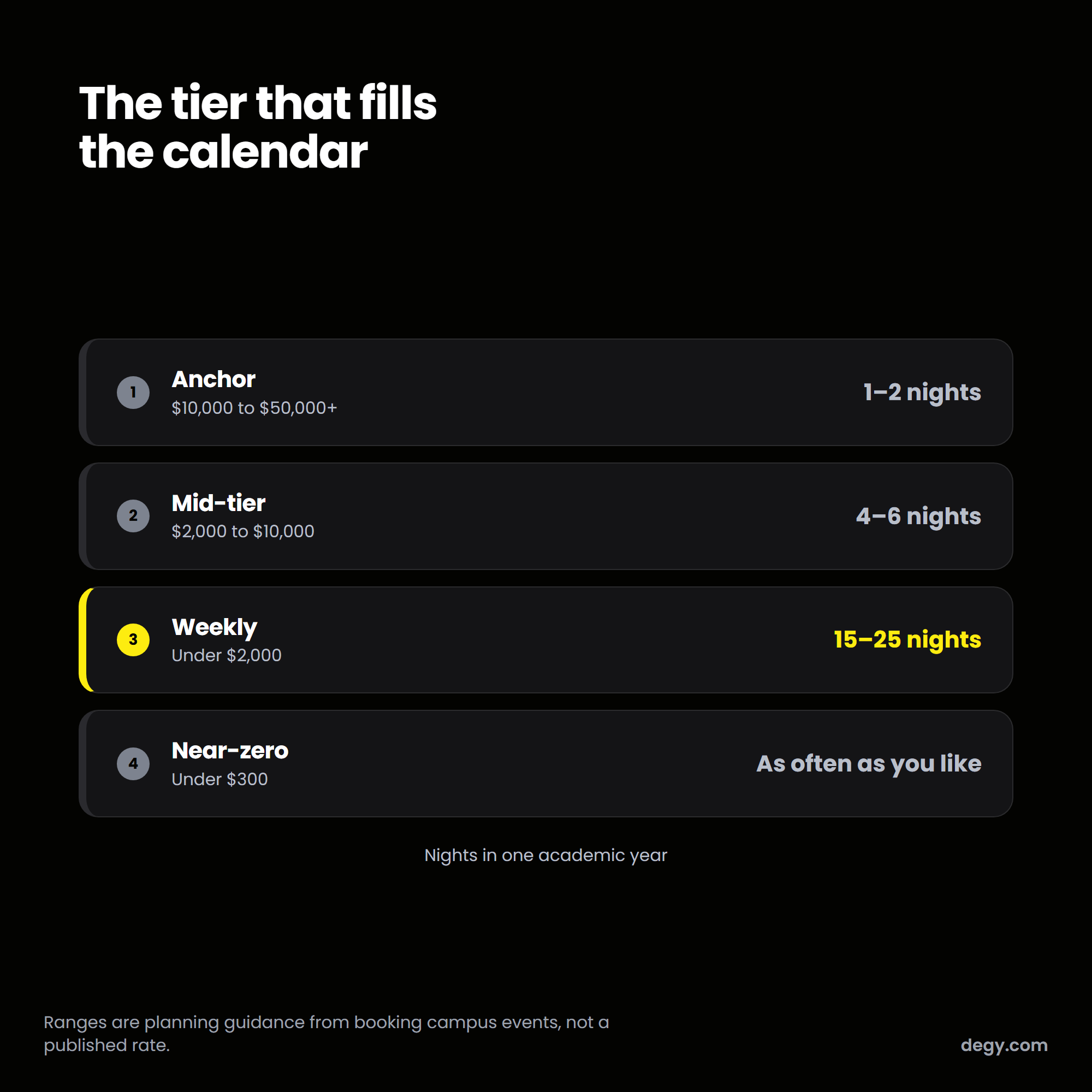
The second filter is budget tier. Programming boards tend to think in terms of what they can afford for one big night, when the more useful question is how many nights the year has to cover.
Each range above is our planning guidance from booking campus events, not a published rate. The one set of figures that is published is the fee band on every act page: 91.3% of the acts on our exclusive roster top out at $10,000 or less, which is why a mid-tier budget goes further than most boards expect. A band is the artist's fee alone, so add production, travel and hospitality on top of it before you commit.
The cheaper of these two nights is the one more students turn up to.
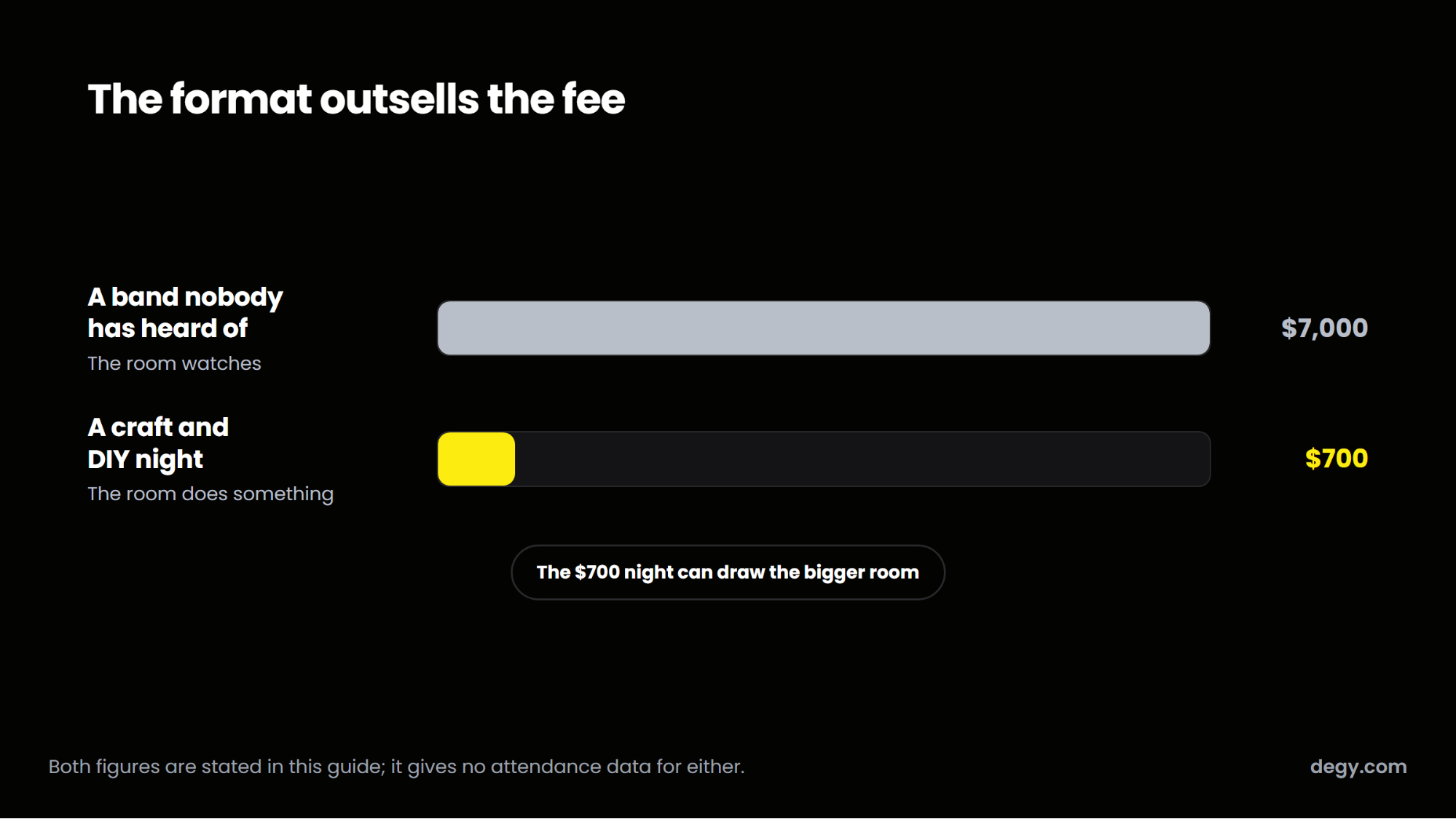
The third filter is format. The campus event ideas that work without a famous name are the ones where students do something; watch-only events need a name they already know. Do-something events do not, which is why a $700 craft night can outdraw a $7,000 band nobody has heard of.
Welcome Week and Orientation Ideas
The first two weeks set habits for the whole year. Students who attend something in week one are far more likely to attend something in week nine, so front-load volume over prestige here. Our welcome week playbook goes deeper on sequencing these days.
1. Outdoor movie on the quad. Budget $1,200 to $2,500 for a 20-foot inflatable screen, projector, audio and an operator. Pick a film released in the last three years, start at dusk rather than a fixed clock time, and put free popcorn at the entrance so the line becomes the crowd.
2. Block party with food trucks. Three to five trucks, a DJ, and a closed campus street. Some trucks will trade the pitch fee for the foot traffic and some will not, so confirm it in writing before you build the budget around it; the rest of the spend is the DJ, permits and barricades.
3. Headphone disco. Three channels, three DJs, 300 to 500 headsets. Because the sound is in the headsets, it is the high-energy format most likely to clear a residential quad's late-night noise rules, though you still need to check what your campus and city require.
4. Involvement fair with a live DJ. The fair already exists on most campuses. Adding a DJ and a small stage turns a table-lined hallway into a place students linger, which is the entire point of the event.
5. Glow party. UV lighting, glow sticks, white-out dress code. Costs a fraction of a concert and photographs well enough to do most of next year's promotion for you.
6. Campus-wide scavenger hunt. Run it through a free app with QR codes at 15 campus locations. It moves first-years through buildings they would otherwise not find until October.
7. Late-night breakfast. Dining services staff, pancakes at 11pm, faculty serving. The cost is labor, and on the campuses we work with it is usually among the better-attended nights of week one.
8. Stand-up night for first-years. Three short sets rather than one long one. Clean, campus-tested material matters more than a name at this stage, and a $2,500 booking fills a 300-seat room.
Welcome week rewards density. Five modest student events across seven days build more habit than one large event on the Saturday.
Big-Draw Nights That Fill a Venue
Anchor events justify a real spend, need lead time measured in months, and are the only category where the name on the poster genuinely sells the ticket.
9. Regional headliner concert. A regional act with real streaming numbers in your state often outdraws a bigger national name students do not connect to your campus. Book eight to ten months out.
10. Touring comedian. A comedian needs a 250 to 800 seat room, a stool, a mic and working sightlines. Comedy travels lighter than music, which is why it is usually the cheapest way to sell out a theater.
11. Hypnotist show. Volunteers from the audience become the show, so the draw is the format rather than the performer. It works on campuses where no single music genre unites the student body.
12. Mentalist. Close-up mind reading scales to a theater with a camera and a screen. It suits mixed-age crowds like family weekend better than a band does.
13. Spring fest. An outdoor afternoon with a headliner, two openers, food and vendors. This is the single largest logistical lift on the calendar, and it needs a rain plan written before the contract is signed.
14. Homecoming concert. Alumni attendance changes the economics, because you can charge them while keeping students free. Coordinate with advancement early; they often hold budget you do not know about.
15. Battle of the bands. Student acts compete, a professional headlines the second half. Each competing band brings its own friends, so the audience arrives built in.
16. Drag revue. A strong draw on campuses that program it, and it scales from a $1,500 local cast to a touring name.
Anchor events fail on logistics far more often than on talent. Confirm stage size, power and load-in access before you fall in love with a lineup, because a stage that cannot physically hold the act is the mismatch we see most.
How to Get a Concert Approved by Student Government
The approval meeting kills more campus concerts than the budget does. Treat it as a procurement pitch rather than a fan pitch.
- Bring three options at three price points, not one. A single proposal invites a yes-or-no vote; three invites a discussion about which.
- Lead with cost per attendee, not total cost. A $15,000 act that draws 1,200 students costs $12.50 a head, which compares favorably to almost anything else you fund.
- Show the date's competition. A calendar slide proving nothing else runs that night answers the question somebody will ask anyway.
- Name the contingency. Say what happens if the act cancels and who absorbs the deposit, because that is the risk the treasurer is actually weighing.
- Bring the offer sheet, not a screenshot. Deposit schedule, cancellation terms and rider obligations in writing make the request look like a contract rather than a wish.
We wrote a fuller version of this argument in our guide to pitching a campus concert, including the objections that come up most.
Ideas Under $2,000
This tier does the real work of a programming calendar. Run these weekly, keep the format identical so students learn the rhythm, and vary only the theme.
Set against the rest of the year, this is the tier that does the volume.
17. Open mic night. A PA, two mics, a sign-up sheet and a host who can fill gaps. Under $400 if you own the audio, and it builds a performer community that feeds every other event you run.
18. Trivia night. A host, a projector and prizes worth about $150. Teams of four to six, five rounds, one picture round. It repeats better than almost anything else, because the format carries it rather than the booking.
19. Bingo with real prizes. The prize table is the draw. Budget $600 to $900 for electronics or gift cards and the room fills without any act at all.
20. Coffeehouse series. Acoustic performer, low lighting, free coffee, 60 to 120 seats. The room setup decides this one: low seating, a small riser, and no empty floor between the performer and the front row.
21. Student art show. Gallery walls, a two-hour opening, cheese and sparkling cider. Costs almost nothing and reaches students who never attend a concert.
22. Poetry slam. Three rounds, five judges pulled from the audience, a $200 first prize. It draws a different crowd than open mic and often a larger one.
23. Video game tournament. A bracket on two or three screens, entry free, prize pool $300. Run it in a lounge rather than a ballroom so spectators can crowd around.
24. Karaoke night. Rent a system for about $250 or use a student DJ. Works best from 9pm, and works better with a two-song limit per person.
25. Craft and DIY night. Screen printing, candle pouring, tote bags. Students leave with an object, which is why attendance holds up better than for passive events.
26. Live podcast taping. A student-run show recorded in front of an audience, with a guest from faculty or athletics. Near-zero cost and it produces content that promotes the next one.
Block booking is what makes this tier affordable at volume. Coordinating dates with nearby campuses cuts travel costs for touring acts, and block booking for campus events explains how the routing works.
Late-Night and Weekend Programming
Late-night programming exists to offer an alternative to off-campus drinking, and it is judged on whether students choose it, not on whether it is worthy.
27. Rec center takeover. Open the gym from 10pm to 1am with a DJ, the climbing wall staffed, open courts and free smoothies. The building is already paid for, so the cost is staffing and a sound system, usually under $800.
28. 24-hour film challenge. Teams get a prompt, a genre and a required prop on Friday night and screen their shorts to an audience on Saturday. Entry is free, prizes run about $400, and the screening is the event.
29. Roller rink takeover. Buy out a local rink for three hours. Typically $1,500 to $3,000 including skate rental, and the bus ride is part of the event.
30. Escape room build. Convert three classrooms into themed rooms with student-designed puzzles. High build effort, near-zero cash, and it runs for a whole weekend.
31. Casino night. Rented tables, play chips, prizes drawn at the end so no money changes hands. Check your state's rules on prize raffles before you promote it.
32. Foam party. A foam cannon, an outdoor slab, and a drainage plan. Best in the first or last three weeks of the year when the weather cooperates.
33. Movie marathon. Three films in a franchise, blankets, unlimited popcorn, 8pm to 3am. Students come and go, which is a feature.
34. Midnight bowling. Buy out lanes from 10pm. Around $12 to $18 a head, which means $1,800 covers roughly 120 students.
Late-night events live or die on transport. If the venue is off campus, the shuttle is not a detail, it is the event.
Wellness and Community Ideas
This category has moved from nice-to-have to central. The Healthy Minds Study reported that high loneliness among students fell from 58% in 2022 to 52% in 2025, which is progress and still more than half the student body. A meta-analysis of 56 studies covering 30,062 higher-education students found a moderate-to-strong negative relationship between loneliness and belonging, and concluded that community support matters most during periods of social disruption.
Drawn out as a hundred students, the improvement and the size of the problem are visible at once.
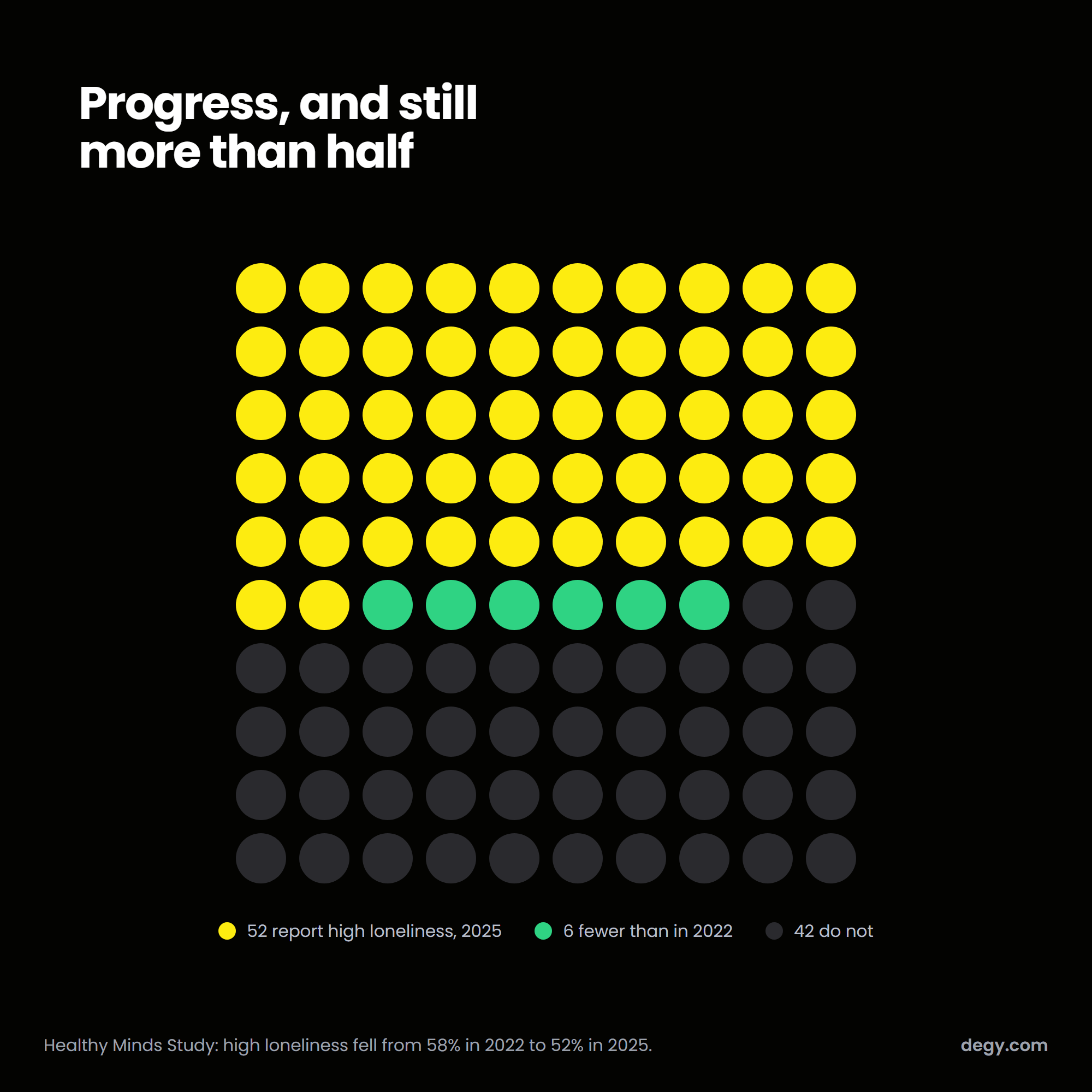
Healthy Minds Study, 2022 and 2025.
35. Paint and sip, alcohol-free. A guided painting session with a host and supplies for 40 to 80 students. Our own Mission Masterpiece is built for exactly this, an immersive paint experience in the $0 to $10,000 band that arrives with everything it needs.
36. Therapy dog afternoon. Coordinate through a certified handler organization. Free to low cost, and the line forms before you finish setting up.
37. Yoga on the lawn with a DJ. An instructor and a DJ playing low-tempo sets. Turns a wellness activity into something students bring friends to.
38. Mental health speaker. A speaker with a real story rather than a general wellness talk. Pair it with counseling-center staff in the room so the next step is immediate.
39. Sleep and stress workshop. Run by health services, 45 minutes, with free eye masks. Unglamorous, and it lands better in week ten than the same session does in week two.
40. Community garden build day. A Saturday morning, tools, soil, and a free lunch. It reaches students who never attend evening programming.
41. Self-defense clinic. Campus safety or a local instructor, two hours, capped at 30. Book repeat sessions rather than one large one.
42. Wellness fair with live acts. Tables plus a stage. The acts are what pull students past the tables, which is the difference between a fair and an empty hallway.
Programming for belonging works best when it recurs. One wellness week in April does less than a standing Tuesday event that students can rely on, a point we develop in why campus events matter.
Cultural and Heritage Programming
Heritage months are on the calendar whether or not you program them, and students notice which ones get a budget.
43. Heritage month celebration. Music, dance and food from one tradition, programmed with the relevant student organization rather than for it. Budget $2,000 to $8,000 depending on the ensemble.
44. International food festival. Student organizations each run a table, the institution covers ingredients. One of the cheapest events here to stage, and a strong draw wherever the student organizations own it.
45. Cultural dance performance. A professional ensemble with a short workshop before the show. The workshop is what converts spectators into participants.
46. Storytelling night. Students and faculty tell seven-minute true stories on a theme. Near-zero cost, and it produces the kind of campus moment nothing else does.
47. Film series with facilitated discussion. Three films over three weeks with a faculty facilitator. Keeps a small, committed audience rather than a large, passive one.
48. Guest speaker with a shared background. Choose someone whose story connects to your student population specifically, not a generic keynote. The booking question is relevance, not fame.
Programming across cultures goes wrong when it is decorative. Bringing in cultural heritage acts alongside the student organizations that own the tradition is what keeps it from reading as a checkbox.
Greek Life and Student Org Ideas
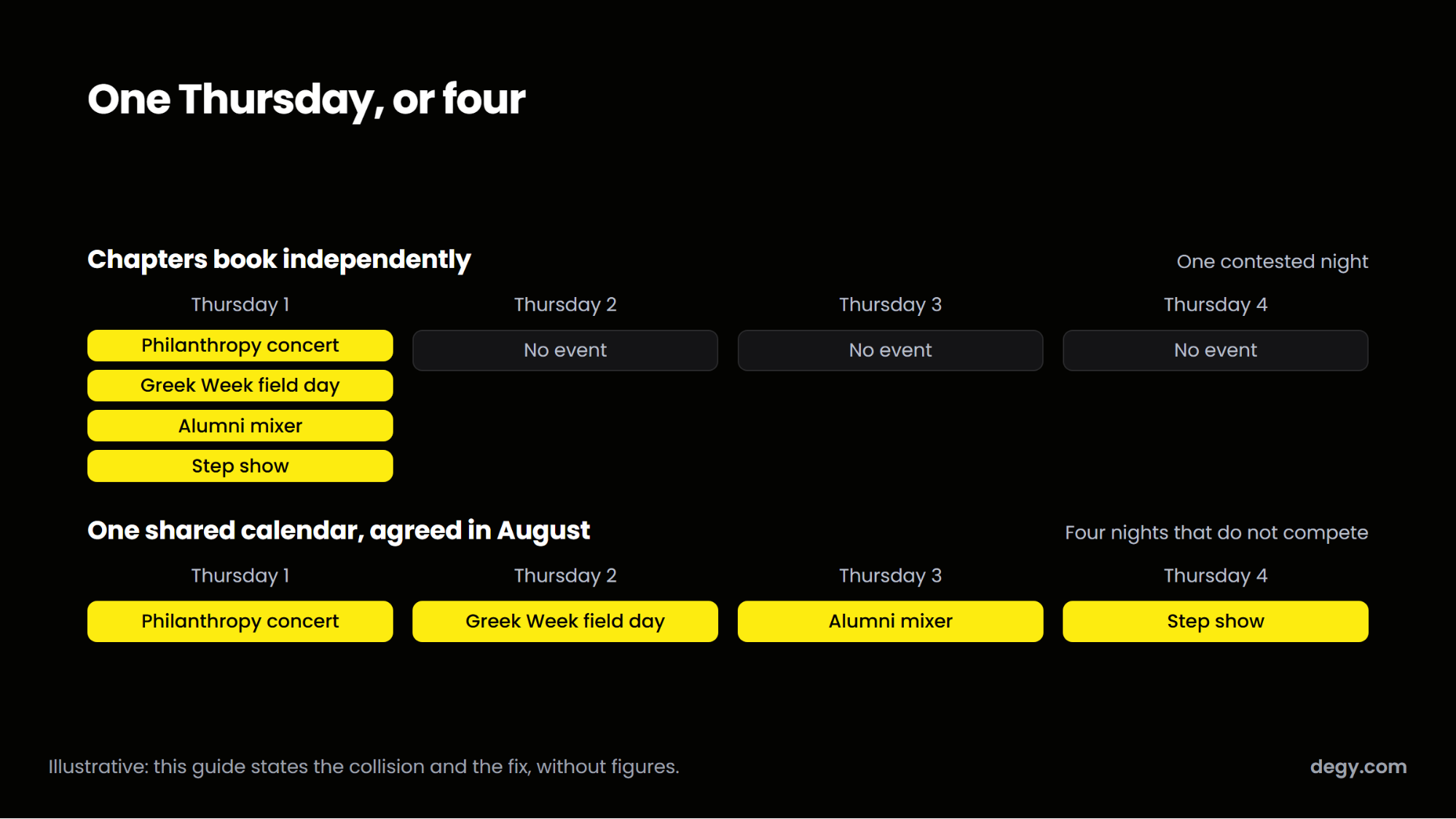
Greek events have their own budgets, which effectively doubles your programming capacity if you coordinate with chapters rather than compete with them.
The same four chapter events fill four nights instead of one when the calendar is shared.
49. Philanthropy concert. A chapter raises the money, you provide the venue and production. Both sides get an event neither could fund alone.
50. Greek Week field day. Tug of war, relay races, an inflatable obstacle course. Rentals run $800 to $2,000 and the chapters supply the crowd.
51. Alumni mixer. Chapter alumni return, current members network. Advancement will often cover catering for this one.
52. Recruitment social. A variety act or dance party as the anchor of a recruitment event, so prospective members see the chapter having fun rather than pitching.
53. Step show. Multiple organizations compete, judged, ticketed. A strong draw on campuses with active NPHC chapters, where the competing organizations bring the audience.
54. Charity dodgeball tournament. $25 per team entry, 16 teams, proceeds to a chosen cause. Runs in a gym in three hours.
Coordinating a shared calendar with chapters early in August is worth more than any single event on this list, because it stops four organizations booking the same Thursday. Greek events fill a calendar fast once they are planned alongside everything else rather than around it.
Finals Week and End-of-Year Ideas
The last three weeks need low-commitment programming students can drop into for twenty minutes between study sessions.
An event with one start time cannot catch a student who has twenty minutes.
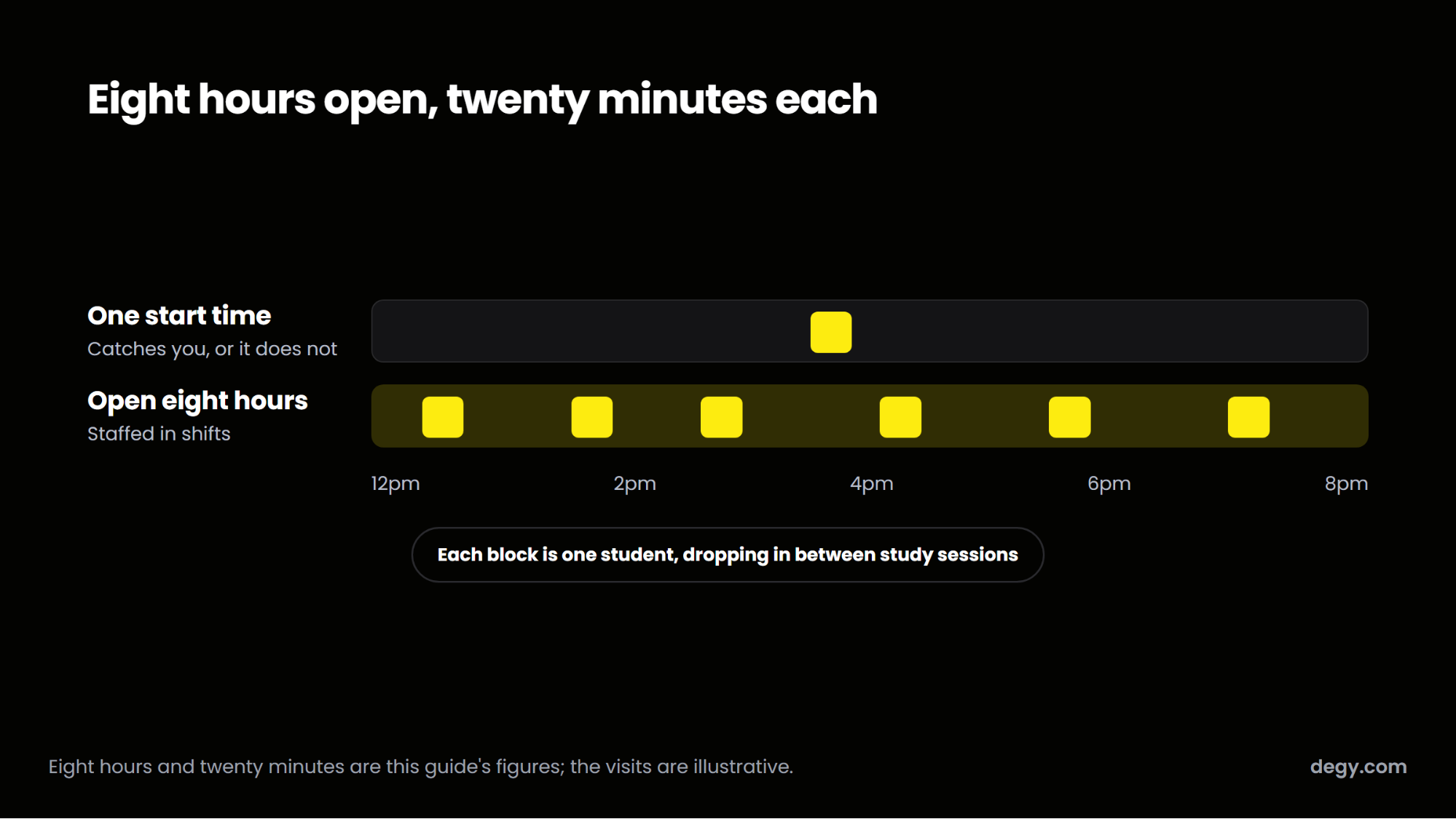
55. De-stress fest. Bubble wrap, puzzles, coloring, snacks, in a room that stays open eight hours. Staff it in shifts.
56. Chair massage and stretch clinic. Two licensed chair-massage therapists for two hours, plus a short mobility session run by campus rec. Budget $400 to $600, and expect a line the entire time.
57. Late-night study fuel. Coffee, fruit and breakfast bars delivered to the library at 10pm for three consecutive nights. Pure logistics, no booking.
58. Senior send-off concert. A modest outdoor show for graduating students only. Exclusivity does the promotion, so the act does not have to be large.
59. Awards banquet with a variety act. A magician or a mentalist working the room between courses keeps a long program moving. Budget $1,500 to $4,000.
60. Grad week comedy night. A clean touring comedian the night before commencement, with families welcome. It broadens the audience beyond students at the one point in the year when parents are on campus.
End-of-year programming is judged by whether students felt the year closed properly, which is a lower bar than most boards assume and easy to miss entirely.
When to Book Each Tier
Lead time is the variable most programming boards underestimate. A mid-tier act for a Friday in October is a decision made the previous spring, and a headliner for that same date is one you make the previous winter.
The pattern holds across every campus we work with: the earlier tier is about availability, the later tier is about promotion. Missing the first costs you the act, missing the second costs you the audience.
Where We Fit
Degy Entertainment has been booking campus entertainment since 2001, and we hold two things a programming board usually does not. One is an exclusive roster of acts built for this market, including turnkey experiences like On Repeat, an artist tribute dance party that arrives as a complete production. The other is buyer-side access to headline talent, where we are retained to secure an act rather than to represent it.
The clearest example of what that access is for came from Tyler Glauser Nicholas at the University of Tennessee-Knoxville, who found out the day before a multi-act concert that the headliner was not going to make it. We secured a replacement on under 24 hours' notice, and in his words attendance came in higher than expected. That is the situation a programming board cannot solve alone at 4pm on a Thursday.
If you are building next semester's calendar and want a second opinion on dates, tiers or a specific act, tell us about your event and we will work through it with you.
FAQs
What is a realistic budget for college event ideas like these?
It depends on tier rather than on a single number. Weekly programming like trivia or open mic runs under $2,000 including prizes and audio, and mid-tier acts such as a touring comedian sit between $2,000 and $10,000. An anchor event like a spring fest starts around $10,000.
A useful planning rule is to reserve roughly half the year's budget for one or two anchor events and spread the rest across fifteen to twenty-five small ones.
How far in advance should we book a campus concert?
Eight to ten months for a headliner tied to a fixed date like homecoming or spring fest, and four to six months for a mid-tier act. The constraint is not the performer's calendar so much as routing, because touring acts build schedules around geography and the good Friday and Saturday dates go first. Smaller in-house events need only two to three weeks, and that window is about promotion rather than availability.
Which campus event ideas get the highest attendance?
Across the campuses we book, the events that tend to win ask students to participate rather than spectate: interactive experiences, food-led events, competitions with prizes, and formats with a built-in audience such as a battle of the bands or a step show. Passive events can draw just as well, but only when the name on the poster is one students already follow. Free food helps at almost any format.
How do we program events students will attend when the budget was cut?
Shift the mix rather than shrinking every event equally. Keep one anchor event so the year has a centerpiece, then replace mid-tier bookings with student-led and do-something formats that cost a few hundred dollars each. Block booking with nearby campuses lowers the cost of touring acts by sharing travel, and campus partners such as dining, athletics and advancement often hold budget for events they would gladly co-sponsor.
Do we need permits and insurance for an outdoor campus event?
Usually yes, and the requirements come from your own institution before they come from the city. Expect to need facilities approval, a certificate of insurance from every vendor and performer, and a weather plan naming who decides to cancel and by when. Outdoor amplified sound and street closures typically need municipal permits, so confirm the lead time with your campus events office early, because it is often longer than the booking itself.