12 Top Event Planning Companies in the US (2026)
Key takeaways:
- "Event planning company" covers at least six different businesses. A trade show contractor, a destination management company and an association management company are not substitutes for each other.
- Match the firm to the hardest part of your event. If the venue is the problem, hire a DMC. If the general session is the problem, hire a production agency.
- None of the twelve firms below publishes a rate card, including ours. Quote-based pricing is the norm in this category, not a warning sign.
- Ownership matters more than most buyers check. Freeman owns Sparks, and ITA Group is affiliated with Hartmann Studios; both of those appear on our corporate-events roundup as separate firms.
The Bureau of Labor Statistics counts 172,100 event planners working in the United States in 2025, with the occupation growing 6% through 2035. Most work inside companies and associations rather than at event planning agencies, which is the first clue about what an outside firm is for: you hire one for the parts your own team cannot staff.
The label "event planning companies" hides enormous differences. A firm running a 12,000-person user conference has almost nothing in common with one handling a federal trade mission to Nairobi, and both call themselves full-service event management. This list is organized around that distinction, drawn from the nine client markets we serve, from colleges and military bases to fairs and corporate clients.
How We Picked These Firms
Every one of these event planning companies was verified against its own website in September 2026, not against a directory listing. Directory categories go stale, firms pivot, and several of the most-cited roundups here are republishing rankings that stopped being accurate a year ago.
Shortlists of the best event companies usually rank on reputation. Three different checks decided inclusion here, and the first is a verifiable US presence read off the firm's own site, because a firm's own pages are the only authority on where it operates. Not every firm designates a headquarters, and three here do not, so the test is a checkable US base of operations rather than one corporate address.
The second check is current evidence that it still does event planning, read from its services pages rather than inferred from an old category. The third is published, checkable work: named clients, named case studies or named events.
That process changed the list. We cut one firm after confirming it had merged into another on this list, corrected one that had rebranded entirely, and removed several candidates that turned out to be sponsorship or video-production agencies filed under event planning by directories.
The most useful input to a selection like this is not a roundup at all, it is your own last event. Last year's numbers will tell you which part actually went wrong, which is the part to hire against.
Every pricing cell reads the same way for a reason. Nobody in this category publishes rates, ourselves included, because the work is scoped per event and a published number would be meaningless. Treat a quote-only posture as normal and judge firms on what their proposals actually contain.
Three of the twelve do not publish a corporate headquarters, and we are one of them: Cohera operates as a network of destination offices, Jack Morton designates none of its offices a global headquarters, and Degy reaches buyers by phone and form rather than by office. None of this is a red flag, but it does mean a physical address is a poor way to judge any firm here.
The 12 Companies
Degy360°
Degy360° is our own full-service event management division, which we would rather state plainly at the top than bury at number nine.
Degy360° grew out of Degy Entertainment's talent booking business, which is what separates it from most firms here. A conventional planner treats entertainment as a vendor line sourced late; we start from the act and build the event around it, because stage size, power, load-in access and curfew are all decided by the booking.
Core services: Site mapping and CAD layout; budget development with reporting through the event; compliance and permitting; sponsorship and ticketing coordination; integrated talent buying, so the act and the operation are one decision; on-site execution with a dedicated Operations Manager.
Industries served: Government and military, colleges and universities, municipal parks and recreation, fairs and festivals, corporate and private clients.
Pricing: Quoted per event, with no published fee or commission. We do publish a fee band on every act in our roster, so the largest line in an entertainment-led budget is visible before you call, and that band is the artist's fee rather than the event's cost.
- Pros: Talent buying and operations under one roof, published artist fee bands, genuine government and military experience, a dedicated Agent and Operations Manager per event
- Cons: Strongest fit is events with a live entertainment component, so a pure trade show is a better fit elsewhere; no published pricing
Notable work: Degy360° oversaw the NBA All-Star fan activation at Tower City Center in Cleveland, turning a retail atrium into a working live entertainment space. It is our only published case study and it carries no attendance or revenue figures, so we are not attaching any.
Where it fits: Any event where attendance depends on who is performing, because the talent buying business existed first and the operations division was built around it.
Final verdict: Strongest on a festival, fair, municipal concert or campus event where the entertainment is the reason people come. For a purely logistical meeting several firms below fit better, and we would tell you so; our event management division page has the full service list.
Maritz
A large engagement and incentive company headquartered at 1375 N. Highway Drive in Fenton, Missouri, where business events is one of six solution lines alongside loyalty rewards, sales incentives and channel partner engagement.
Core services: Sourcing and contracting for venues at scale; registration and housing management, which is the part most in-house teams cannot staff; full event management for corporate and association programs.
Industries served: Associations, financial services, life sciences, automotive, manufacturing.
Pricing: Quoted. No rates, minimums or ranges appear anywhere on its site, and inquiries route to a contact form.
- Pros: Operational scale few competitors match, deep association experience, registration and housing handled in house
- Cons: Events are one line of a much broader business, so you are not its only product; built around sourcing, registration and housing rather than show production, so a keynote-heavy general session needs a second partner; no named case studies on its business events pages
Notable work: Its own site keeps client work general rather than naming accounts, which is worth knowing if named references matter to your procurement process.
Where it fits: Large, logistics-heavy meetings where registration and housing volume is the hard part rather than the creative.
Final verdict: The right call when the event's difficulty is measured in attendee numbers rather than in production ambition.
BCD Meetings & Events
Global meetings and incentives agency with its global headquarters in the Accenture Tower at 500 W Madison Street in Chicago, part of the same group as BCD Travel. Says it has been doing this for over 35 years without naming a founding year.
Core services: Strategic meetings management, consolidating scattered event spend into one program; venue sourcing across 13-plus countries; event design and production for the meetings themselves.
Industries served: Life sciences, medtech, financial services, advanced technology, automotive.
- Pricing: Quoted. No rate card, and no indicative ranges either.
- Pros: Genuine multi-country delivery, strong life sciences compliance experience, publishes real named case studies
- Cons: Built for programs rather than one-off events; travel-management heritage shows in the emphasis; several case studies are anonymized by client request
Notable work: Named public case studies include a Lenovo product launch, a BMW incentive trip in Vietnam, a Diageo virtual awards show and the Royal Society's Commonwealth Science Conference.
Where it fits: A meeting program spanning several countries, which carries a compliance and sourcing problem a domestic agency simply has not encountered.
Final verdict: Built for a meetings program that crosses borders, and overqualified for a single domestic event.
Opus Agency
Events and experiential marketing agency with its United States headquarters at 9000 SW Nimbus Avenue in Beaverton, Oregon, describing 30-plus years of work and a team of around 400. Its client base is heavily enterprise technology.
Core services: Flagship conference production, from content architecture through show calling; brand and theme development that carries across a multi-day program; film and broadcast production for keynote and hybrid delivery.
Industries served: Enterprise technology, financial services, healthcare, automotive, consumer brands.
Pricing: Quoted, via an RFP form rather than a contact form, which tells you something about typical deal size.
- Pros: Demonstrable experience with very large user conferences, strong content and creative capability, named work at recognizable scale
- Cons: Enterprise-weighted, so a smaller program may not get its best team; the capability is weighted toward keynote-scale production, so a logistics-only meeting pays for depth it will not use; pricing posture suggests a high floor
Notable work: Salesforce World Tour, Dell Technologies Forum, AWS Summit ASEAN, NetApp INSIGHT and a TikTok Creator Camp all appear as named work on its own site.
Where it fits: The kind of conference where the keynote is a product launch and the production values have to match the announcement.
Final verdict: A leading choice for a flagship technology conference, and probably the wrong shape for a 200-person sales meeting.
Jack Morton
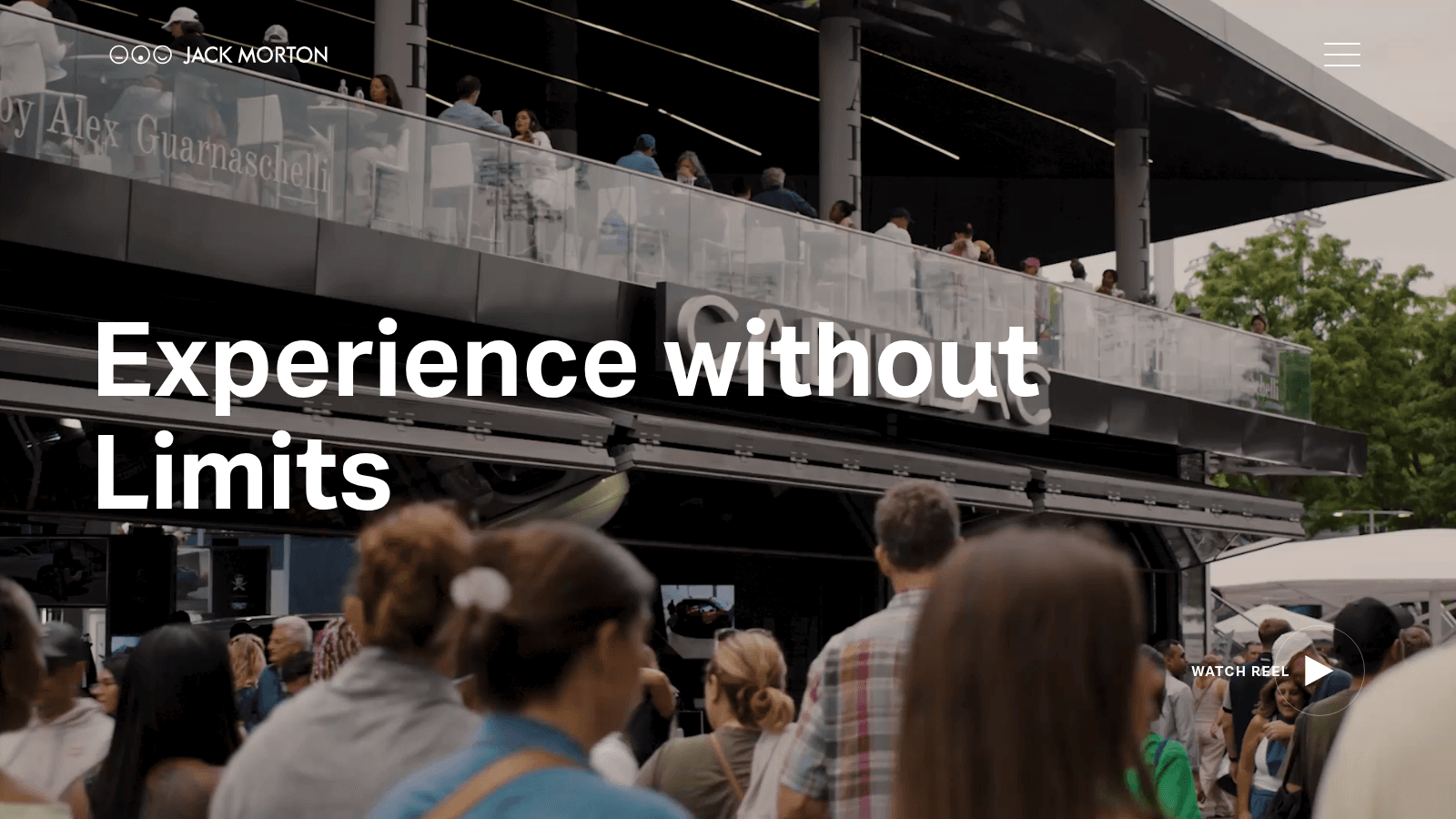
Global brand experience agency, now considerably larger following its merger with Impact XM. Jack Morton's own announcement confirms the combined agency operates under the Jack Morton name with backing from The Riverside Company, across 20 offices. Its site lists ten Americas offices but designates none of them a global headquarters.
Core services: Large-scale brand activations and trade show environments; broadcast-quality experience design; sponsorship consulting through its Jack 39 unit.
Industries served: Technology, automotive, healthcare, sports, consumer brands.
Pricing: Quoted, with no commercial figures anywhere on its site.
- Pros: Very large named client roster, consolidated capability after the merger, strong fabrication and environments work
- Cons: Brand-marketing framing rather than event-management framing, which suits some buyers and not others; ten Americas offices with no single hub, so which team you get depends on where the work lands; a merger this recent means some teams are still settling
Notable work: Amazon at CES 2026, Chevrolet at CMA Fest, Cadillac at the US Open, plus SailPoint Navigate and Hisense at CES carried over from Impact XM.
Where it fits: The top end of brand-led events, where very few firms can build the physical environment, run the program and handle the sponsorship in one contract.
Final verdict: Best suited to brand marketing budgets rather than meetings budgets, and worth approaching with a clear brief given how recently the two agencies combined.
Freeman
The dominant trade show and exhibition company in the United States, headquartered at 14221 North Dallas Parkway in Dallas with more than 20 US offices. Its own timeline dates the first Freeman Decorating office to 1927, opened by Donald "Buck" Freeman, which makes it 99 years old in 2026. Its site copy still describes a 97-year legacy, so expect to see both figures quoted.
Core services: General contracting for trade shows, which covers the floor plan, rigging and the entire exhibitor supply chain; exhibitor services, the part your exhibitors will judge you on; audiovisual production for general sessions.
Industries served: Trade show organizers, exhibitors, conference producers, healthcare, food and beverage.
Pricing: By quotation, and exhibitor services are billed separately at each show.
- Pros: Unmatched national footprint for exhibitions, handles organizer and exhibitor sides, long institutional memory of specific shows
- Cons: Trade show shaped, so a gala or a concert is not its center of gravity; scale can mean less senior attention on a smaller show; exhibitor pricing is a frequent source of friction at shows generally
Notable work: Its client roster names HIMSS, the International Baking Industry Exposition, Shoptalk and Amazon's NewFronts.
Where it fits: Any event with an exhibit hall, because the general contractor decision shapes everything else about the show.
Final verdict: The default for exhibitions, and worth knowing that it also owns Sparks, which appears on our corporate events roundup as a separate firm.
Encore Global
Event production company headquartered at 5100 North River Road in Schiller Park, Illinois, with more than 2,200 venue partnerships worldwide. Its identity is weighted toward event technology and audiovisual, though its own FAQ argues it leads the full production lifecycle.
Core services: In-house audiovisual and staging at partner venues, which removes a whole negotiation; creative and experience design; technical direction and show management.
Industries served: Hotels and convention centers, corporate enterprise, associations, hospitality, education.
Pricing: Quoted, and where it is the in-house provider the quote arrives through the venue.
- Pros: Already embedded in thousands of venues, strong technical depth, simplifies the AV contract
- Cons: In-house venue AV is not always the cheapest route; identity is production rather than planning; if your venue already has a different in-house provider, bringing Encore in means negotiating around that contract
Notable work: Its site describes client work in general terms rather than naming accounts.
Where it fits: An event inside a hotel or convention center, where it makes the technical side somebody else's problem.
Final verdict: Often already the in-house provider at your venue, which makes the real question whether to use them or bring in an outside producer.
ITA Group
Employee-owned engagement company founded in 1963 and headquartered at 7000 Vista Drive in West Des Moines, Iowa. Event marketing is one of three solution lines alongside incentive travel and employee experience.
Core services: Event strategy and management for corporate programs; live event production; incentive travel design, which is where much of its reputation sits.
Industries served: Manufacturing, financial services, technology, insurance, automotive.
Pricing: Quoted per program, with nothing indicative published.
- Pros: Sixty-plus years of continuous operation, employee-owned since 1987, genuine incentive travel depth
- Cons: Events sit inside a broader engagement offering; no named case studies surfaced on its site; Midwest-weighted footprint
Notable work: No named accounts anywhere on the site; client work is referenced only in the abstract.
Where it fits: Programs where recognition and events are connected, because a firm that does both can make the event carry the scheme.
Final verdict: Strongest when the event is the visible part of an ongoing incentive or recognition scheme rather than a standalone date. It is also affiliated with Hartmann Studios, which appears on our corporate events roundup as a separate firm.
The Webster Group
Event and conference management firm at 5185 MacArthur Boulevard NW in Washington, DC, with more than 30 years of work and an unusual specialty in federal government and international trade mission events. WBENC-certified and a GSA contract holder.
Core services: Federal and government event management, including the contracting vehicle; international trade mission logistics across multiple countries; non-profit and association galas and conferences.
Industries served: Federal agencies, non-profits, associations, international trade bodies, corporate.
Pricing: Quoted, and federal work is available through its GSA schedule.
- Pros: Rare federal contracting experience, genuine international delegation logistics, named public-sector work
- Cons: DC-centric; smaller than the national firms on this list; the specialty is narrow if your event is commercial
Notable work: Its published client list names the National Endowment for the Humanities' Jefferson Lecture, the National Cherry Blossom Festival opening ceremony, a USTDA Indo-Pacific Energy Security Ministerial in Tokyo and PenFed Foundation events.
Where it fits: Any event where a government contracting vehicle, protocol or a foreign delegation is part of the problem.
Final verdict: The obvious shortlist entry for federal, diplomatic and trade mission work, and a genuine differentiator that larger firms cannot easily match.
JDC Events
Boutique event planning firm headquartered at 8403 Colesville Road in Silver Spring, Maryland, led by president and CEO Jennifer D. Collins. Works across corporate, government and association clients using its own EventScience process.
Core services: Integrated event planning for corporate and association programs; government event support; a structured planning methodology rather than an ad hoc approach.
Industries served: Corporate, federal government, associations.
Pricing: Quoted per project. No minimum is stated.
- Pros: Senior people stay on the account, structured methodology, strong Washington regional knowledge
- Cons: Small team, so capacity is a real constraint; EventScience is a planning methodology rather than a production capability, so a show-heavy general session needs a separate producer; strongest in the mid-Atlantic, so a multi-city national program adds travel cost
Notable work: It publishes a detailed Bonaventure investor day case study covering 60-plus investors on a six-week turnaround.
Where it fits: A mid-sized program that wants the seniority a national agency saves for its largest accounts.
Final verdict: A good fit when your event is important to you but would be a small account at a national firm.
Cohera
Destination management company formed in 2025 from the merger of CSI DMC and 360 Destination Group, which acquired Destination South DMC in 2026. Its own timeline runs back to 1978 and claims over 45 years, with Capitol Services Inc. founded by Jill McGregor in 1987 and 360 Destination Group formed in 2011. Worth knowing that csi-dmc.com now resolves to Cohera, so older recommendations under the CSI DMC name point here.
Core services: On-the-ground destination logistics in a specific city, which is what a DMC is actually for; transportation, staffing and venue knowledge locally; decor, entertainment and experience production.
Industries served: Corporate incentive travel, association meetings, brand activations.
Pricing: Quoted per destination, which is how DMCs generally price.
- Pros: Wide destination network after two mergers, genuine local supplier relationships, deep incentive travel experience
- Cons: Coverage is destination by destination, so a city outside its published network means engaging a different DMC; a DMC supplements rather than replaces a planner; recent mergers mean some destination teams are newly integrated
Notable work: Maintains a portfolio section without naming accounts prominently.
Where it fits: An unfamiliar city, because nobody flying in for three days knows which loading dock works or which caterer shows up.
Final verdict: The right supplier when the problem is local execution in an unfamiliar market, and normally engaged alongside a planner rather than instead of one.
MCI USA
Engagement marketing agency and association management company, the US arm of the global mci group, headquartered at 1660 International Drive in McLean, Virginia, with offices in Towson, Chicago and Plano.
Core services: Association congress and annual meeting management; full association management, including the parts that are not events; sponsorship and exhibitor revenue growth.
Industries served: Associations and scientific societies, non-profits, sports bodies, corporate, government.
Pricing: Quoted, often inside a broader association management retainer.
- Pros: Genuine association management depth, worldwide network of 60 offices, named society and association clients
- Cons: Association-weighted, so a corporate buyer may find the fit indirect; event work usually sits inside a broader association management retainer, so a standalone one-off event is an unusual shape for it; several case studies leave the client unnamed
Notable work: The National Business Aviation Association, IAAPA and the World Energy Council's World Energy Congress appear as named clients on its own site.
Where it fits: Association events, which tangle membership, revenue and governance together with the meeting, and that is a specialism rather than a service line.
Final verdict: The only association management company on this list, and the right call if your event is also your organization's main annual revenue moment.
Read across these top event companies and almost none competes with any other. They are twelve different businesses sharing one label, which is why the next section matters more than the ranking does.
Which Kind of Firm Do You Actually Need
Most bad agency selections here are category errors rather than quality errors. The firm was competent and built for a different problem.
Event management companies and event planning firms are often the same businesses under different labels, so ignore the label. Name the hardest part of your event out loud, then pick the firm whose core business is that thing.
Outdoor events add a category of their own, because the weather contingency has to be written into the contract rather than discussed on the day; our notes on bad weather outdoors cover what that clause needs to say.
The second filter is whether your event is a large or small account at the firm you are considering. A program that is a rounding error to a national agency gets junior attention, however good the pitch team was.
US Travel's group travel report describes a flat 2025 with RFP volumes still above 2019 levels. Agencies are busy but competing hard, which is a reasonable moment to ask for more in a proposal than you otherwise would.
Questions to Ask Before You Sign
The proposal stage is where the differences between these firms become visible, and the useful questions are unglamorous.
Ask who is on your event, by name and role, and whether those people are in the pitch. Ask what happens if that lead leaves mid-cycle. Ask how the firm is compensated, specifically whether it takes commission from venues or suppliers alongside its fee, because that changes which venues you get shown.
Finally, ask for a reference from an event that went badly. Every firm on this list has had one, and how they describe it tells you considerably more than a case study will. What you are listening for is whether they knew what competent show-day operations looked like while it was going wrong.
Three Contract Questions Most Buyers Skip
The commercial terms are where a proposal stops being a pitch and becomes a contract, and three of them carry most of the risk you are taking on.
- What are the cancellation and postponement terms, and what is non-refundable at each stage?
- Who holds the vendor contracts, you or the agency? This decides what happens if you part company mid-cycle.
- What does the firm's own insurance cover if something goes wrong on site, and what does it exclude?
Ask all three in writing rather than in the pitch meeting. These conversations run on their own booking vocabulary, and a term you nod along to is a term you have agreed to.
Where Entertainment Fits Into Event Planning
One category distinction is worth drawing out, because it is the one this list is least well served by elsewhere. Most event planning firms treat entertainment as a procurement item: a line in the budget, sourced once the venue and dates are fixed.
That works when the entertainment is background. It fails when the entertainment is the reason anyone is coming, because by the time the act is chosen, the stage size, power supply, curfew and load-in access have already been locked by decisions made for other reasons.
Degy Entertainment has run nearly 3,000 events a year in 30 countries for more than 25 years. The most common expensive problem we are called into is a venue that cannot physically accommodate the act somebody already announced.
Turning a field into a working concert site is solvable, and our guide to field-to-venue conversion sets out the CAD mapping and logistics involved. It is still far cheaper to sequence the decisions correctly in the first place.
Work starts with an intake conversation rather than a proposal template, because the scope question is usually which parts you want to keep in house. From there it runs in five steps.
- Tell us the date, the market and roughly what the event is meant to achieve.
- We come back with an honest read on whether the date is realistic.
- We design and deliver the offer, including the entertainment options at their real fee bands.
- We negotiate price and terms.
- We advance the event and staff it on site.
Engagements run from a talent-only booking through full turnkey event management. If you are scoping an event where the lineup drives attendance and you want a straight answer about whether your date and budget are realistic, tell us about your event.
FAQs
How much does an event planning company cost?
Nobody in this category publishes rates, including us, so any figure you see in a roundup is an estimate rather than a quote. Fee structures vary between a flat project fee, a percentage of total event spend, a management fee plus pass-through costs, and hourly consulting.
The percentage model is the one to interrogate, because it rewards the firm for a bigger budget. Ask explicitly whether the firm also takes commission from venues or suppliers, since that revenue is invisible in the fee you are quoted.
What is the difference between an event planner and an event production company?
A planner owns the program, the budget, the vendors and the timeline. A production company owns what the audience sees and hears: staging, audio, lighting, video, show calling.
Large firms do both, but their center of gravity is usually one or the other, and it shows in the proposal. If your event's difficulty is a 4,000-person general session with a live product reveal, you need production depth. If it is 40 breakout sessions and 900 hotel rooms, you need planning depth.
How far in advance should we hire an event planning company?
Nine to twelve months for a large annual conference, six months for a mid-sized corporate event, and three months as an absolute floor for anything with a venue and a keynote. The constraint is rarely the agency's availability; it is that venues, hotel blocks and any live entertainment are committed far earlier than most buyers expect. Hiring late does not just compress the timeline, it removes options that were available and quietly disappeared.
Should we hire a national firm or a local one?
It depends on whether your problem is scale or local knowledge. A national firm brings process, purchasing power and the ability to run the same program in six cities. A local firm or destination management company brings relationships with the specific venues, caterers and crews in one market, which matters enormously on the day. Many programs use both, with a national planner owning the program and a DMC handling the ground in each city.
Do event planning companies handle entertainment booking?
Most will source it, but sourcing and buying are different things. A planner typically approaches an agency or an artist's representative and passes along a quote, whereas a talent buyer negotiates the fee and the terms directly and knows what a rider actually commits you to.
If entertainment is a minor part of your event, sourcing is fine. If the act is the reason people are attending, the booking should drive the site plan rather than follow it, which is a different sequence than most planners use.