50 Fundraising Event Ideas That Raise More Than They Cost
Key takeaways:
- Pick the event for the goal. Raising money, growing the donor list and getting press are three different jobs, and the formats that do them well barely overlap.
- Net matters, gross does not. A gala that grosses $80,000 on $52,000 of costs loses to a golf outing that grosses $45,000 on $9,000.
- Entertainment is the line item most often cut and the one that most often sells the ticket. Fund it from sponsorship rather than from the program budget.
- If a ticket buys dinner and a show, part of it is not a donation. The IRS requires a written disclosure on any payment above $75 where the donor gets something back.
American charitable giving reached $617.20 billion in 2025, the first year it crossed $600 billion, according to Giving USA. None of that makes any individual fundraiser easier to run. You still have a committee of volunteers, a venue that wants a deposit in March, and a board member who thinks the silent auction can be organized in a week.
The 50 fundraising event ideas below are grouped by what they are good at, not by season, and most work equally well as charity event ideas for a school, a club or a faith group. Each one carries the detail that decides whether it nets money: what it costs to stage, roughly what it returns, and the thing that most often goes wrong. Some scale to a thousand guests. Several can be run for under $1,000.
How to Pick a Fundraiser That Actually Nets Money
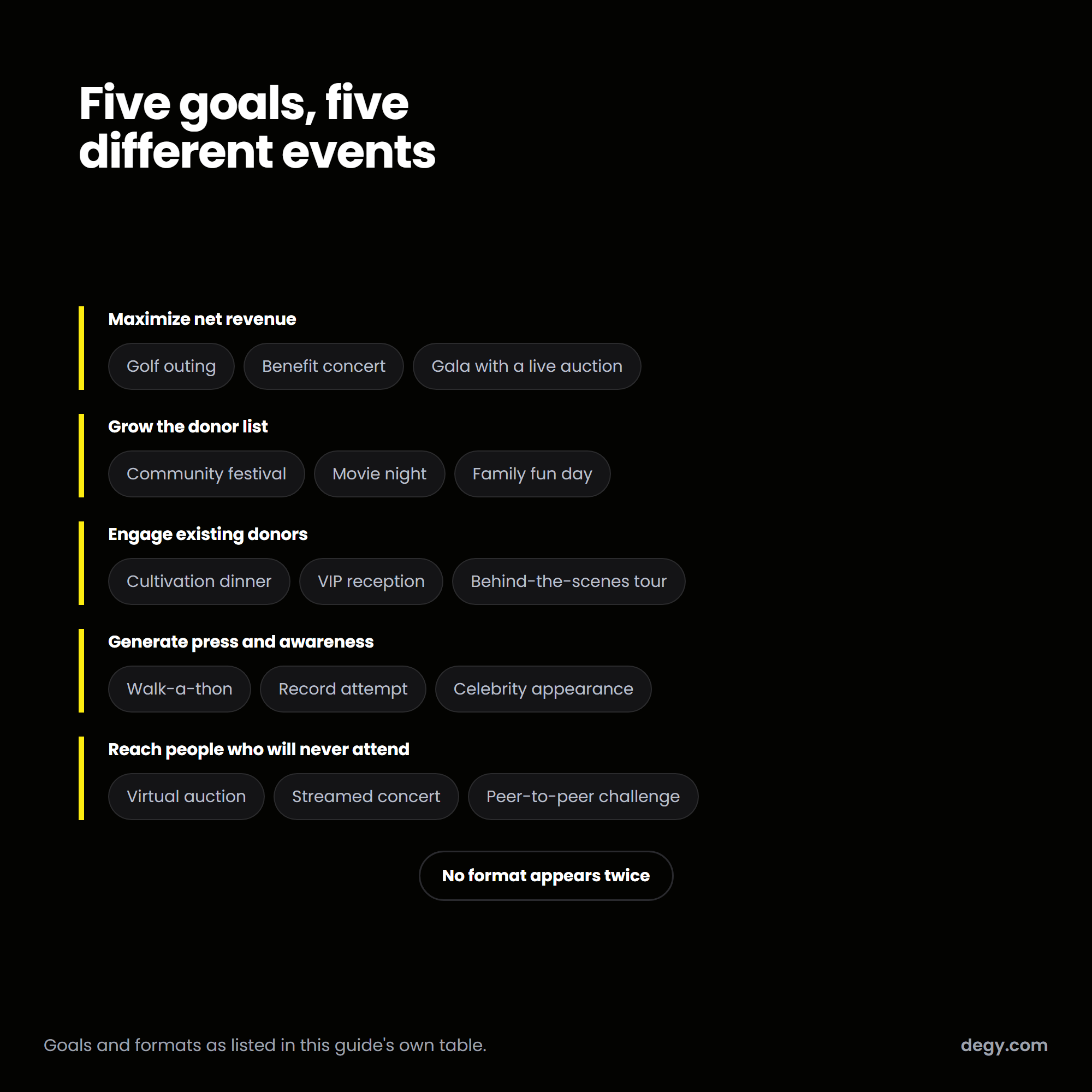
Planning a fundraiser starts with naming the goal out loud, because the formats diverge fast. An event built to maximize net revenue looks nothing like one built to bring 300 new names onto the list, and neither looks like one built to get a reporter to show up.
Set side by side, the five goals below share no formats at all.
The second question is capacity. Volunteer hours are the real constraint on most fundraisers, not money, and a format that needs eight weeks of committee work will quietly consume goodwill you need for the rest of the year. Costing the talent line early is what keeps the rest honest, a sequence we set out in developing a talent budget.
Each range above is our planning guidance from booking and running fundraising events, not a published benchmark, and they move sharply with market and donor base. Treat them as a starting shape rather than a forecast.
The third question is what the ticket actually buys. Once a guest receives dinner, drinks or a performance in exchange for a payment, part of that payment stops being a gift, which changes both your accounting and your legal obligations to the donor.
Ticketed Events With a Headliner
Ticketed events with a name attached carry the highest ceiling here, and the highest risk. The act sells the ticket, which means the booking decision happens before almost anything else on this list.
1. Benefit concert. A regional act in a 500 to 1,500 seat room. The whole model works if the talent is underwritten by a sponsor, and collapses if it is paid from ticket revenue you have not sold yet.
2. Comedy night. Cheaper to stage than music, because a comedian needs a mic, a stool and lights rather than a full backline. A 400-seat room at $45 a ticket grosses $18,000 against a far smaller production cost.
3. Gala with a live auction. The auction, not the dinner, is the revenue engine. Budget for a professional benefit auctioneer; the fee is routinely the best-returning line in the entire budget.
4. Casino night. Rented tables, dealers, play chips, prizes drawn at the end. Check your state's charitable gaming rules first, because the compliance question is real and varies sharply by state.
5. Tribute band dance party. A well-drawn tribute act delivers a full dance floor at a fraction of an original artist's fee, which is why it is one of the most reliable net-positive bookings in this category.
6. Dinner with a guest speaker. An author, athlete or local figure with a genuine tie to your cause. The tie matters more than the fame, because the ask lands better when the speaker can make it credibly.
7. Variety and magic evening. A mentalist or close-up magician working tables between courses keeps a long program moving and gives guests something to talk about that is not the ask.
8. Cultural or heritage performance. A dance company or ensemble tied to the community you serve. Program it with that community rather than for it, and the ticket sells itself through their networks.
Choosing between a local act and a touring name changes the entire budget, and the trade-offs are not obvious; we work through them in our guide to local versus major talent.
How to Pay for Talent Without Eating the Proceeds
Entertainment is the line most boards cut first, and cutting it is usually how a ticketed fundraiser stops selling tickets. The answer is to move the cost off the program budget rather than to remove it.
- Sell the entertainment as its own sponsorship. "Presented by" on the act is an easier sell than a generic gold tier, because the sponsor gets a name attached to the thing guests remember.
- Book the act before you set the ticket price, not after. The fee is the single biggest input into what the ticket has to cost, and reversing the order guarantees a shortfall.
- Ask for a nonprofit rate in writing. Many acts hold one, and it is never volunteered.
- Build a VIP tier that covers the fee on its own. Forty guests at $250 against a $9,000 act means the general-admission tickets are pure margin.
- Put the deposit and cancellation terms in front of the treasurer before signing. A 50% non-refundable deposit on a date you may move is the risk nobody costs in.
Whichever route you take, settle it before tickets go on sale. An act underwritten after the fact is a cost you are absorbing, not a cost you planned.
Participation and Challenge Events
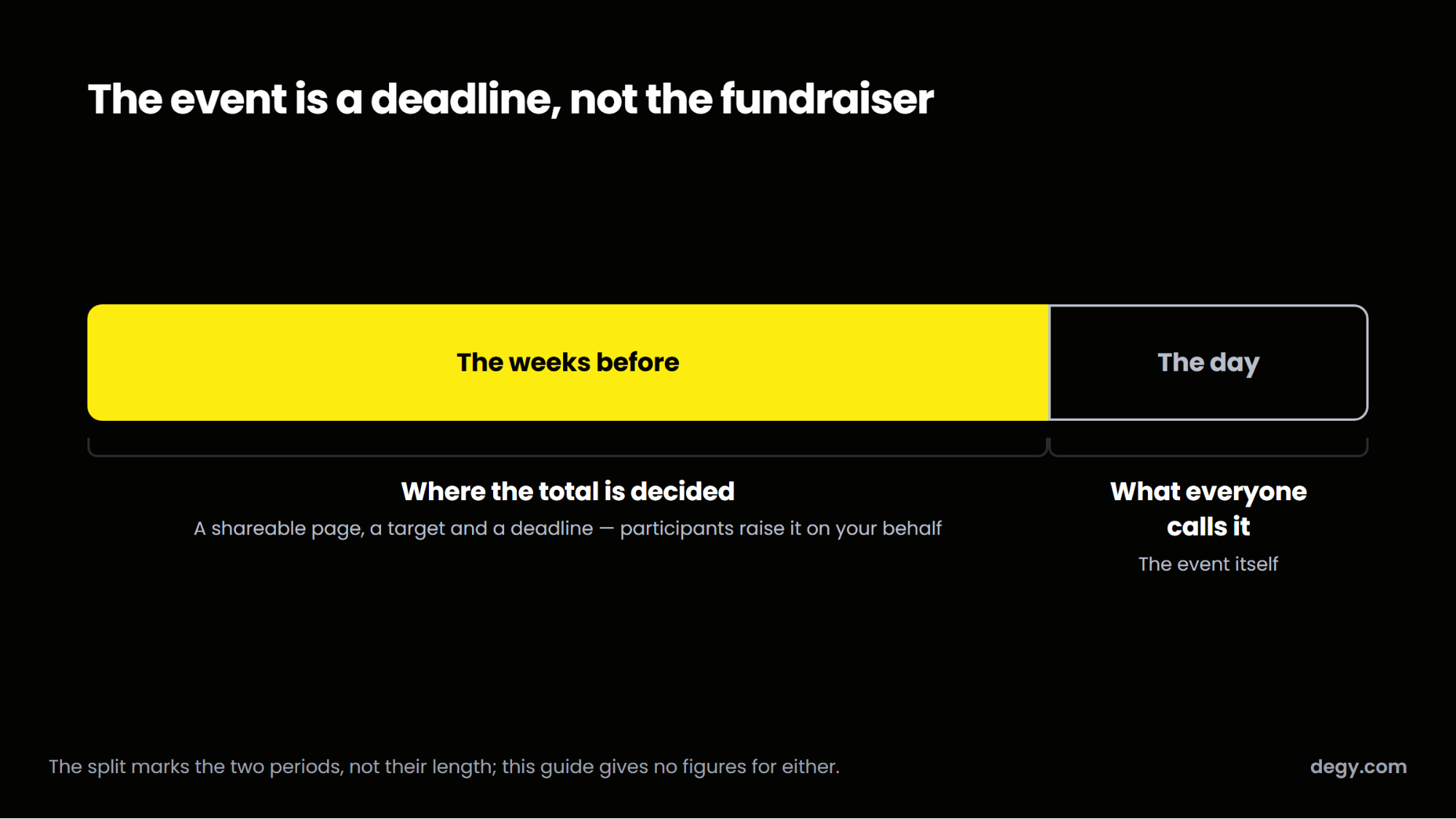
Participants raise money on your behalf, which is what separates this category from every other one. The event is a deadline, and the fundraising happens in the weeks before it.
The part everyone plans for is the smaller half of the job.
9. Walk-a-thon or fun run. Low cost, high list growth, modest net per participant. Route permits and water stations are the real work; the walking takes care of itself.
10. Golf outing. Consistently among the best net-to-effort ratios available. Foursomes at $1,000 to $2,500, hole sponsorships at $500, and a course that handles the operations.
11. Cornhole tournament. Sixteen to sixty-four teams, $50 to $100 per team, a parking lot and a sound system. Runs in an afternoon with a committee of four.
12. Trivia night. Teams of six at $30 a head, a host, a projector. Add a raffle between rounds and the per-guest revenue roughly doubles.
13. Pickleball tournament. Rising fast on the committees we talk to, and courts are easier to secure than a golf course.
14. Bowling marathon. Lanes bought out for an afternoon, teams raising a minimum to play. Works well as a corporate team fundraiser.
15. Bike ride. Tiered distances so casual riders and serious cyclists both have a reason to register. Support vehicles and marshals are the cost.
16. Polar plunge or head shave. Spectacle-driven peer-to-peer fundraising. Low staging cost, strong press potential, and it needs a safety plan signed off in advance.
17. Read-a-thon or craft-a-thon. Runs inside a school or library with almost no infrastructure. The fundraising is entirely in the sponsorship forms.
18. Corporate challenge. Companies field teams and compete on total raised rather than on athletic performance. It converts a single corporate contact into dozens of individual donors.
The format only works if participants are given something to send. A shareable page, a target and a deadline do more for the total than anything that happens on the day, and a paid upgrade tier lifts it further, which our guide to VIP passes and tiers covers in detail.
Community and Family Events
Community fundraising events grow the donor list. The most widely copied examples of charity events sit in this group, and they rarely produce the largest net, so judging them on net alone is how organizations talk themselves out of the most effective donor acquisition they have.
19. Food truck festival. Trucks pay a pitch fee, you sell admission, a band plays. Vendors bring their own following, which is most of your marketing.
20. Movie in the park. A screen, a license, a field. Admission by donation and revenue from concessions. One of the cheapest ways to put 400 families in one place.
21. Car show. Entrants pay to display, spectators pay to look, and the whole thing runs on a parking lot on a Saturday morning.
22. Chili cook-off. Teams enter, guests buy tasting tickets and vote. Costs almost nothing and generates a genuine local rivalry that repeats annually.
23. Holiday market. Vendor booths plus a family activity. Book a strolling act rather than a stage act so the sound does not fight the shopping.
24. Pancake breakfast. The most durable community fundraiser there is. Labor is the cost, and volunteers are the labor.
25. Family fun day. Inflatables, face painting, a balloon artist, a petting zoo. Priced by wristband, and the wristband is what makes the accounting simple.
26. Touch-a-truck. Fire engines, diggers and a tractor in a parking lot. Free for departments to provide, enormous draw for families with small children.
27. Community talent night. Local performers, a small entry fee, a judged final. The competitors bring the audience with them.
28. Dog show or pet parade. Entry fees, vendor booths, best-in-category prizes. It also produces more shareable photographs per dollar than anything else here, which matters if the event is partly a marketing exercise.
Large outdoor family events carry the accessibility and crowd-safety obligations most committees discover late, and event safety and accessibility is worth reading before the site plan is fixed.
Auctions, Raffles and Giving Moments
The mechanics below are revenue tools rather than standalone charity events, and they are what turn a break-even evening into a profitable one.
Counted out, a twelve-lot auction is usually a nine-lot one.
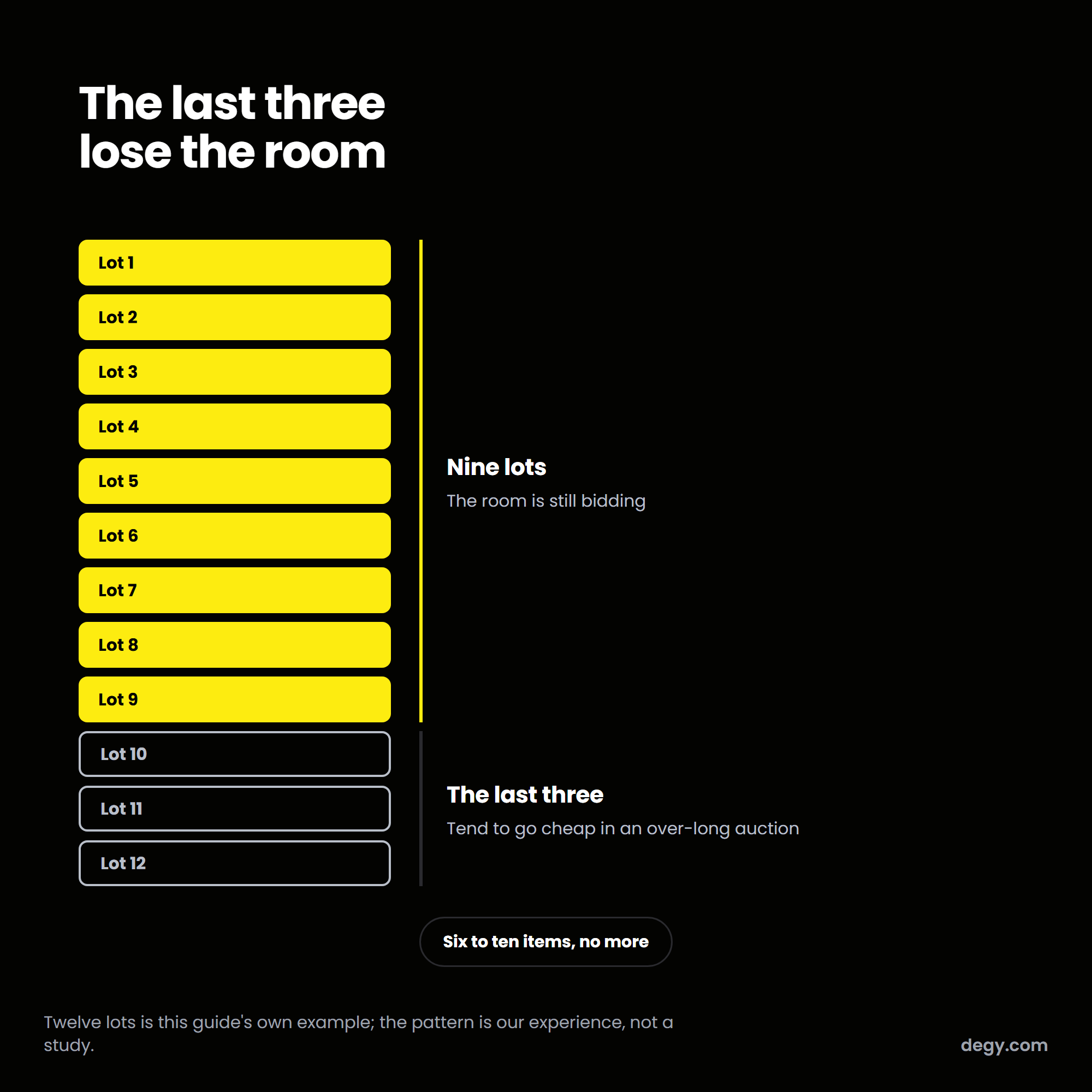
29. Live auction. Six to ten items, no more. A long auction loses the room, and in our experience the last lots of an over-long auction are the ones that go cheap, because the bidders who were competing have already stopped.
30. Silent auction. Mobile bidding has largely replaced paper, and it raises more because bidding continues while guests are seated.
31. Fund-a-need or paddle raise. A single, specific, named cost put to the room in descending increments. Often the largest single revenue moment of a gala.
32. Raffle. Check your state rules first. A small number of strong prizes outperforms a large number of weak ones.
33. Wine or whiskey pull. Guests pay a flat price for a randomly selected bottle. Donated inventory, near-total margin.
34. Heads or tails. A few minutes, one prize, everyone standing up. It resets the energy in a room that has been seated too long.
35. Sponsor a table. Corporate tables at a premium, with the sponsor's name on it. Sell these before general admission opens.
36. Text-to-give moment. A screen, a short code, a live total. Works only if somebody credible makes the ask from the stage.
Every mechanic here depends on one thing: a person on a microphone who can read a room. That is a booking decision rather than a volunteer assignment, and it is the one we are asked about most across private and benefit events.
Fundraising Event Ideas You Can Run for Under $1,000
Small, repeatable fundraisers keep the donor relationship warm between the big events, which is the whole point of them.
37. Restaurant percentage night. A local restaurant donates a share of an evening's sales. Zero cost, and it introduces your cause to their regulars.
38. Bake sale with a theme. A single strong theme outperforms a generic table by a wide margin.
39. Open mic fundraiser. A PA, a host, a donation jar. Under $300 if the venue is donated.
40. Coffee morning. An hour, a church hall or an office, and a short ask at the end.
41. Book or plant sale. Donated inventory, near-total margin, and it runs from a single table.
42. Quiz sheet sale. Printed quizzes sold for a few dollars with a prize for the winner. Costs the printing.
43. Yard sale or swap. Donated goods, a parking lot, and a weekend. It also clears donors' garages, which they appreciate.
44. Birthday fundraiser drive. Ask supporters to dedicate a birthday to you. No event to stage at all, and it compounds year on year.
No charity event in this tier will fund a capital campaign on its own. Run consistently, these ideas do something the gala cannot, which is give people a low-stakes way to stay involved, and most can carry entertainment on a small budget without denting the margin.
Virtual and Hybrid Fundraisers
Virtual events stopped being a substitute and became a way to include the donors who were never going to travel to your ballroom.
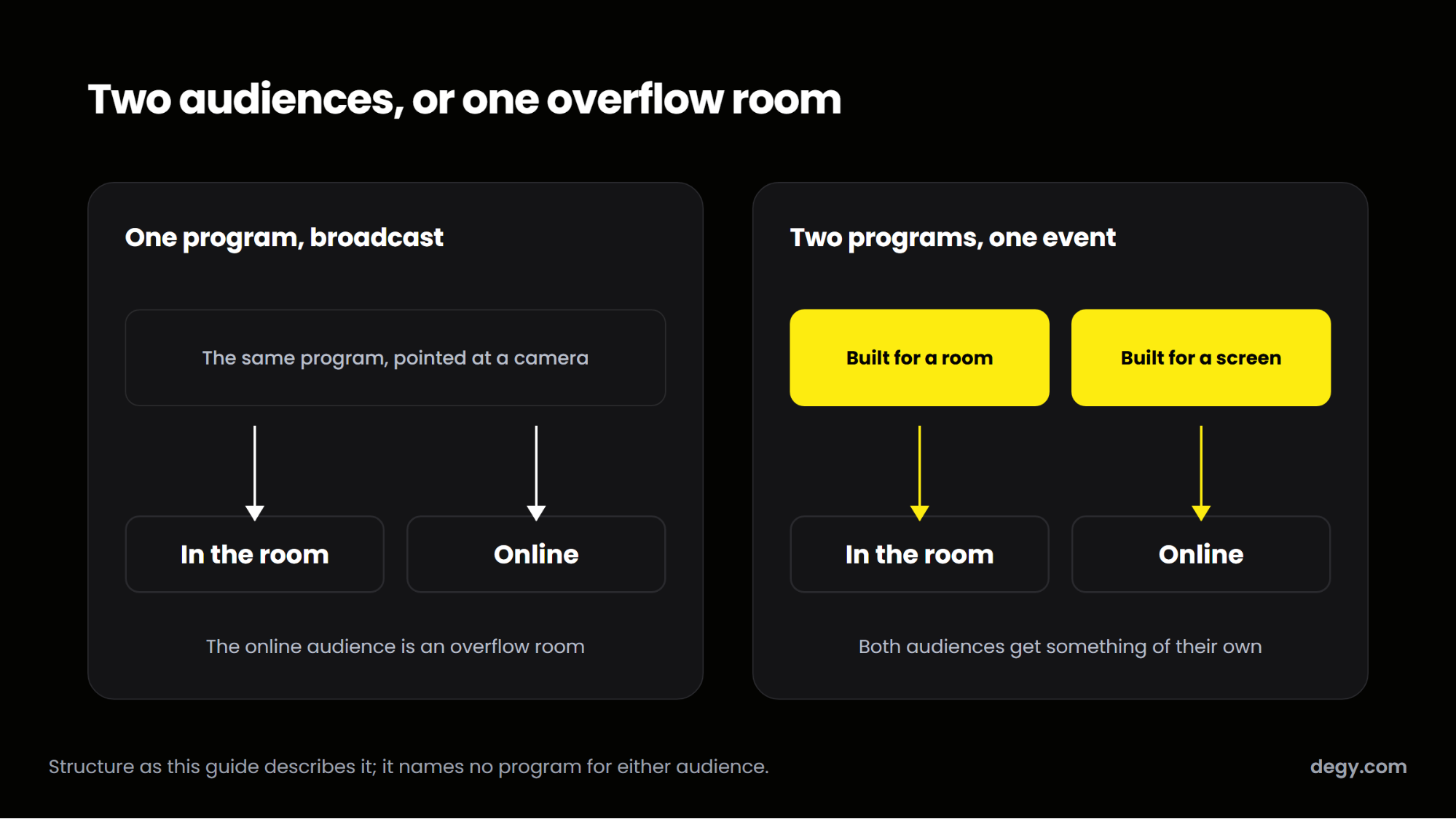
The difference is whether the online audience is programmed for or pointed at.
45. Online auction. Runs for a week rather than an evening, which lifts final bids and removes the room-capacity ceiling.
46. Streamed benefit concert. A performance streamed with a donation overlay. Pair it with a small in-person audience so the room has energy.
47. Virtual gala. Shorter than the in-person version, ideally under 60 minutes. The mistake is running a three-hour program to a screen.
48. Peer-to-peer challenge. Supporters set their own targets over a fixed window. The platform does the work; your job is the weekly nudge.
49. Gaming stream. A streamer plays for a set number of hours with a donation goal. Reaches an audience no other format on this list touches.
50. Virtual behind-the-scenes tour. A live walkthrough of your facility with the people who run it. Cheap, intimate, and unusually effective on mid-level donors.
Hybrid works when the two audiences get different things rather than the same thing, and fails when the online audience is treated as an overflow room.
How to Price a Ticket When Part of It Is a Donation
This is the part most fundraising guides skip, and it is a legal obligation rather than a nicety. When a guest pays and receives something in return, the IRS calls it a quid pro quo contribution, and only the portion above the fair market value of what they received is deductible.
The IRS rules on charitable contributions require a written disclosure statement for any quid pro quo payment above $75. The statement has to tell the donor that only the excess over the value of goods and services is deductible, and give a good-faith estimate of that value.
Worked through on a real gala ticket:
Failing to disclose carries a penalty of $10 per contribution, capped at $5,000 per fundraising event. Put the deductible portion on the ticket itself, the invitation and the receipt, and the problem disappears before it starts.
The other half of ticket pricing is fees. Most ticketing takes a cut from the organizer, which comes straight out of the cause.
On a buyer-paid model the arithmetic lands entirely on the checkout page.
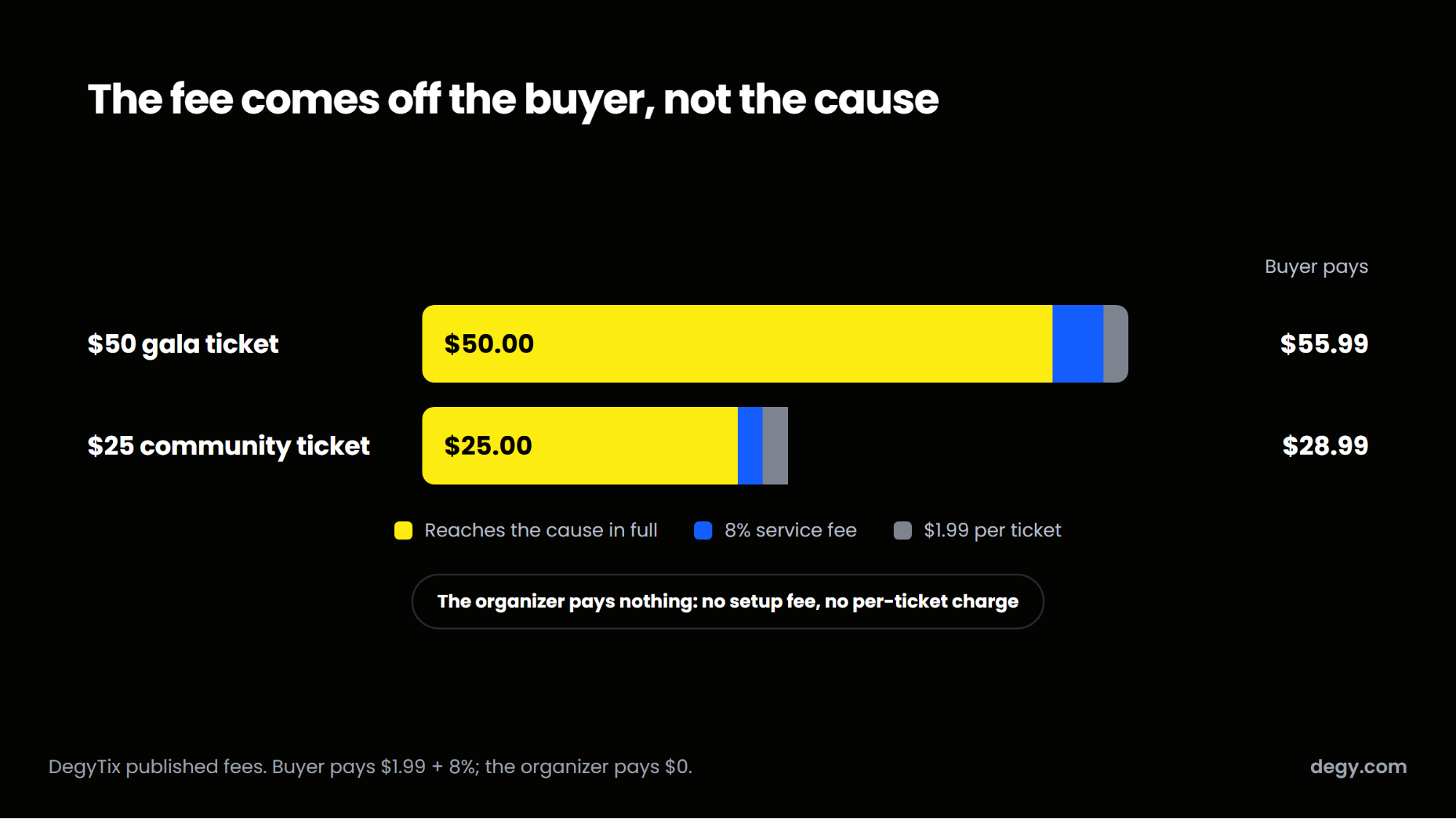
Through DegyTix, our own ticketing arm, the organizer pays nothing at all: no setup fee, no per-ticket charge, and the buyer covers a service fee of $1.99 plus 8%. On a $50 gala ticket that is $4.00 plus $1.99, so the buyer pays $55.99 and the full $50 reaches the cause. A $25 community-event ticket works out at $28.99 on the same math. Portals go live within 48 hours of approval.
Where We Fit
Degy Entertainment books nearly 3,000 events a year in 30 countries. Fundraisers are where the gap between a good booking and a bad one shows up fastest, because the money is not ours or yours, it belongs to the cause.
Two things tend to be worth a conversation. The first is which act actually fits the room and the budget, since the difference between a $4,000 regional act that fills a floor and a $40,000 name that does not is entirely a matter of matching, not of spend. The second is the ticketing structure, because an organizer-paid fee quietly removes several thousand dollars from a successful event before anyone notices.
If you are planning a benefit event for next season and want to sanity-check the lineup or the ticket model, tell us about your event.
FAQs
Which fundraising event ideas raise the most money?
Measured by net rather than gross, golf outings and galas with a live auction tend to top the list, because both combine a high per-guest price with sponsorship revenue that arrives before you spend anything.
A golf outing selling forty foursomes at $1,500 with eighteen hole sponsors at $500 grosses $69,000. Once the course, carts, food and prizes are paid for, a net in the $40,000 to $50,000 range is the realistic outcome.
The caveat is that both formats depend on an existing donor base with capacity, so neither is a good first event for a young organization.
How do we run a fundraiser on a small budget?
Choose a format where donated goods or volunteer labor replace cash costs, and where revenue arrives before expenses do. Restaurant percentage nights, trivia, cornhole tournaments and online auctions all fit, and several can be run for a few hundred dollars. Sell sponsorships before you commit to any spending, so the event is underwritten rather than speculative, and resist adding a catered dinner, which is usually the line that turns a profitable small event into a break-even one.
Do guests get a tax deduction for a fundraiser ticket?
Only for the portion above the value of what they receive. If a ticket costs $150 and the dinner and entertainment are worth $60, the deductible amount is $90.
Any payment above $75 where the donor gets goods or services back requires a written disclosure statement saying so, with a good-faith estimate of that value. The penalty for skipping it is $10 per contribution up to $5,000 per event. State the deductible portion on the ticket and the receipt.
How far ahead should we book entertainment for a fundraiser?
Four to six months for a regional band or a comedian, and eight to ten months if the date is fixed and you want a specific act. The constraint is usually the date rather than the act, because Saturday evenings in spring and fall are claimed early by weddings and corporate events. Book the act before setting the ticket price, since the fee is the largest single input into what the ticket needs to cost.
Should the charity or the ticket buyer pay the ticketing fees?
It depends on your donor base, but buyer-paid fees keep the full ticket price with the cause, which is usually the right answer for a fundraiser. A 5% organizer-side fee on a $60,000 event is $3,000 that never reaches the mission. Buyers are broadly used to a service fee at checkout, and most will not abandon a purchase over it when the cause is clear. Whichever model you choose, show the total price before checkout rather than after.