50 Party Entertainment Ideas for Every Budget and Crowd Size
Key takeaways:
- Crowd size decides the act before budget does. An act that lands with 30 people in a living room will disappear at 300 in a hall, and the reverse wastes most of what you paid for.
- Most private-party entertainment sits between $300 and $5,000. On our own exclusive roster the interactive party formats run from $500 to $50,000, and the great majority of what gets booked for a birthday or an anniversary is in the first thousand or two of that.
- Book one anchor, not four acts. A single thing happening at a defined time beats a schedule nobody follows, and it costs less.
- If anything inflates, read the wind rule. Federal safety guidance says do not operate a consumer inflatable above 20 mph, and that above 25 mph it is dangerous to operate any inflatable ride.
Party entertainment goes wrong in a specific way. Somebody books a great act for the wrong number of people, in a room with the wrong acoustics, at a point in the evening when everyone is eating, and afterward concludes the act was not worth the money.
The 50 party entertainment ideas below are grouped by what they do rather than by what they are. Each entry names a price range, how much notice the act needs, and what the space has to provide, since those three answers settle whether an idea is realistic for you.
The list covers private and social occasions: milestone birthdays, anniversaries, graduations, retirements, engagement parties, housewarmings and neighborhood get-togethers, rather than corporate programs. Private party entertainment carries its own constraints, mostly venues you do not control and guest lists spanning three generations.
One note on why any of this matters beyond the evening itself. The US Surgeon General's advisory on social connection, published in 2023, found that social isolation carries a 29% higher risk of premature mortality, alongside a 29% higher risk of heart disease and a 32% higher risk of stroke. Getting people in a room together is not a frivolous line item.
Start With Crowd Size and the Room
The most useful thing you can do before looking at a single act is write down two numbers: how many people, and how big the space is. Almost every disappointing booking traces back to a mismatch between those two and the act chosen, which is why the best party entertainment ideas are the ones sized to the room rather than the ones with the best reviews.
| Crowd | What works | What fails |
|---|---|---|
| Under 25 | Close-up magic, a soloist, a chef or mixology class, a games host | Anything needing a stage or amplification |
| 25 to 75 | Duo or trio, caricaturist, tarot or handwriting reader, photo booth | A full band, a large inflatable |
| 75 to 200 | DJ, four-piece band, interactive dance format, casino tables | Close-up acts, anything one-to-one |
| 200 to 500 | Full band with production, spectacle acts, headphone disco, glow formats | Anything quiet, anything needing conversation |
| 500+ | Staged acts, tribute shows, aerialists, large-format installations | Roaming performers alone |
The column on the right is the useful one. A close-up magician is outstanding at 40 people and invisible at 300, and a four-piece band that fills a hall will drive 30 people out of a living room. Matching the act to the headcount is most of the work, which is why determining the right performer starts with the room rather than the genre.
Live Music and DJs
Music is the default and it is still the safest single booking, provided you pick the format for the volume the room can take.
The two failure modes are opposites: a close-up act disappears in a large room, and a full band overwhelms a small one.

1. Solo acoustic guitarist or singer. $300 to $800 for two sets, two to three weeks of lead time. Best for 20 to 80 people where conversation is the point and the music is underneath it.
2. Jazz or lounge duo. $600 to $1,500. Needs a six-foot corner and one power outlet, nothing more. The most reliable choice for a milestone birthday where the guests span forty years of age.
3. Four-piece party band. $2,500 to $6,000 for two 45-minute sets. Book six to eight weeks out and confirm the room is at least 75 people, because a band that size in a smaller space is unpleasant rather than lively.
4. Tribute act. $2,000 to $8,000, driven mostly by which artist is covered. Works because the audience already knows every word, which is the entire mechanism. Confirm the costume and staging expectations in writing, since they vary wildly.
5. Event DJ with dance floor lighting. $800 to $2,500 for four hours. The most reliable way to get a dance floor moving, and the format that scales furthest without a cost jump.
6. Dueling pianos. $2,500 to $5,000. Needs two pianos or two keyboards and a host who can work a crowd. Strongest for 80 to 250 where you want participation without organized games.
7. Mariachi, steel pan or bagpipes for a set entrance. $400 to $1,200 for a 30-minute appearance. Booked as a moment rather than as the evening's music, usually to open the party or walk somebody in.
8. String quartet for the first hour. $800 to $2,000. Pairs with a DJ taking over later, which gives a milestone party a clear shape: arrival, dinner, then the floor.
Whatever you pick, the volume question matters more than the genre. Ask what the act needs in decibels and whether the venue has a limiter, because a noise cap discovered on the night turns a band into an expensive background playlist. This is the single most common way live entertainment for events under-delivers, and it is entirely avoidable with one question.
Interactive Entertainment People Join In With
Interactive entertainment ideas solve the problem of a party where everybody stands in the same four clusters all evening. The mechanism is the same in each: give people a task, and the conversation happens as a side effect.
9. Headphone disco. $1,500 to $10,000 depending on headset count and the number of channels. Two or three DJs broadcast at once and guests choose a channel, which means you can run a full dance party in a noise-restricted venue or outdoors at midnight.
10. Paint and sip session. $40 to $70 a head with materials, or $3,000 to $8,000 as a hosted format for a larger group. Two hours, needs table space and a floor you can cover.
11. Glow or UV party setup. $2,500 to $10,000 for the full treatment with lighting, paint stations and reactive decor. Requires a room you can genuinely darken, so confirm that before anything else is booked.
12. Foam party. $3,000 to $15,000. Outdoors or in a space with a drain, and it needs a water source within reach. Tell guests in advance to bring a change of clothes, and put it on the invitation rather than in a reminder on the day.
13. Casino tables with croupiers. $1,500 to $4,000 for four tables and dealers for three hours. Chips play for prizes, not cash. Works from 50 to 300 people and holds attention longer than almost anything else on this list.
14. Game-show format with a professional host. $1,200 to $4,500. A buzzer round with teams, a scoreboard and a host working the microphone turns a seated dinner into an evening, and it scales from 40 people to a few hundred.
15. Mixology or cocktail-making class. $50 to $95 a head. Caps at about 30 before it stops being a class. Best used for the first hour of a party rather than as the whole thing.
16. Roller disco. $2,500 to $5,000 including skate rental. Needs a hard flat floor and a liability conversation with the venue, which is worth having early because some will simply refuse.
17. Salsa or line-dancing instruction. $3,000 to $4,000 for an instructor-led format with music. Thirty minutes of teaching followed by open floor is the ratio that works; an hour of teaching empties the room.
18. Throwback themed dance night. $3,000 to $5,000 for a produced decade format with costume, visuals and a set list. Gives guests a reason to dress up, which measurably raises attendance on a social invitation.
Several of these exist as complete packages rather than as things you assemble, and the packaged version is usually cheaper than sourcing the parts. Headphone discos, glow nights and foam drops are the clearest examples of unusual add-ons that arrive as one booking rather than five.
How to Run a Craft or Paint Station Without a Queue
Hands-on stations fail for one reason, which is throughput. A single table serving 120 people produces a 40-minute line and three-quarters of the room never gets to it.
- Work out the station's real capacity: seats multiplied by turns per hour.
- Divide your headcount by that number to get how many stations you need.
- Open the station at arrival, not after dinner, so the flow spreads over hours.
- Staff it with one host per eight seats, not one host per station.
- Put the drying rack or takeaway packaging somewhere other than the table people are working at.
A paint station with 12 seats and two turns an hour serves 24 people an hour, so a 100-person party needs two stations running for two hours or a single station running from the moment doors open.
A twelve-seat station turning over twice an hour serves 24 people, so a 120-guest party needs either two stations or one that opens the moment the doors do.
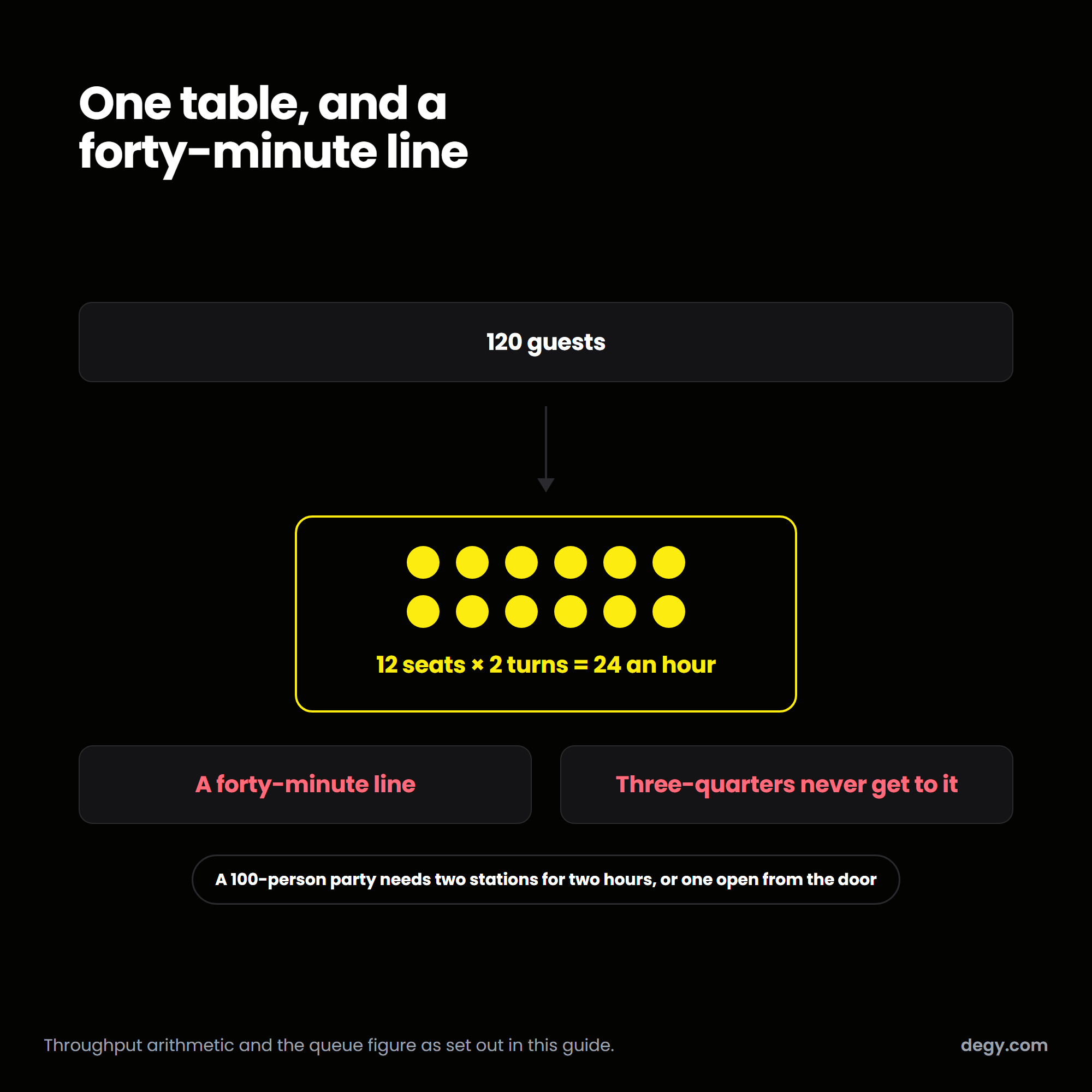
Doing that arithmetic in advance is the difference between an activity and a bottleneck.
Spectacle: The One Thing People Photograph
Every good party has one moment that gets filmed. Booking it deliberately is cheaper than hoping one occurs.
19. Mentalist or mind reader. $1,500 to $5,000 for a 45-minute set. Brice Harney, who is on our exclusive roster, has performed this act for Meta, Google and Microsoft. It needs a seated or semi-seated audience and genuine quiet, so it belongs after dinner rather than during drinks.
20. Close-up magician working the room. $500 to $1,500 for two hours. Nick Paul is the clean-comedy version on our roster, with two decades of this behind him and segments on CONAN and Penn & Teller: Fool Us. It is the best single purchase for a party under 80 where people arrive at different times, because it fixes the awkward first hour.
21. Aerialist or acrobatic act. $2,000 to $6,000. Requires rigging, a structural sign-off from the venue and usually a separate rigger. Start this conversation eight weeks out or it will not happen.
22. Fire performers. $1,000 to $3,500 for a 20-minute set. Outdoors only, with a safety perimeter and a permit in most municipalities. Check the venue's insurance position before the act's.
23. Circus-style variety show. $1,500 to $5,000. Our Freedom Circus format is the kind of booking this describes: a produced set rather than an individual performer, which suits a mixed-age crowd better than a single specialty act does.
24. LED or light-suit dancers. $1,500 to $4,000 for two appearances. The strongest option for a darkened room, and the one that photographs best, which matters more than it used to.
25. Drone light display. $25,000 and up, with airspace clearance, a licensed operator and a weather contingency. Genuinely spectacular and genuinely a different budget category from everything else here.
26. Caricaturist or silhouette artist. $400 to $900 for three hours. Produces a takeaway, which is why guests remember it, and it works at any headcount because the queue is the entertainment.
Pick one of these, not three. A party with a single anchor moment reads as considered, while four competing acts tend to dilute each other, and unconventional acts tend to work precisely because they are the only surprise in the room.
Family-Friendly Acts for Mixed-Age Parties
Graduations, anniversaries and neighborhood parties bring four-year-olds and eighty-year-olds into the same space, and the acts that handle that are a specific and fairly short list.
The act is the top layer of four. Underneath it sit a space that is not the dance floor, an attendant who stays on site, and one named person who owns the zone.

27. Stilt walkers or costumed walkabout characters. $600 to $1,500 for a two-hour appearance by a pair. They cover ground, so they work for a garden party where guests are spread across a lawn rather than gathered in one room.
28. Balloon artist. $300 to $700 for two hours. Serves roughly 25 children an hour, so scale the booking to the actual number of children rather than to the guest list.
29. Face painter. $300 to $600 for two hours, about 15 faces an hour per artist. Book two if you have more than 30 children, because the queue is otherwise the whole party for them.
30. Puppet or storytelling show. $400 to $1,200 for a 40-minute set. Needs a defined seating area away from the bar, and it buys the adults a genuine 40 minutes.
31. Petting zoo or pony rides. $800 to $2,500. Outdoor space, shade, and a hand-washing station, which is usually a licensing requirement rather than a nicety.
32. Giant lawn games. $200 to $600 for a full set of oversized Connect Four, Jenga, cornhole and ring toss. Among the lowest cost per hour of anything staffed on this list, and it runs all afternoon without a host.
33. Bounce house or inflatable obstacle course. $250 to $800 a day for a consumer-grade unit, more for commercial. Read the next section before booking one, because the anchoring and wind rules are not optional.
34. Bubble show or science show. $400 to $1,000 for a 45-minute performance. Works for a wider age band than most children's entertainment, roughly three to twelve.
35. Circus-skills workshop. $400 to $900 for a 60-minute session. An instructor teaches juggling, plate spinning and flower sticks, so children take part rather than watch, which covers the stretch of afternoon when a staged act would lose them.
36. Carnival game row with a prize counter. $400 to $900 for four games and an attendant. Ring toss, a duck pond and a bean-bag throw run on the same throughput arithmetic as the paint station above, so open it at arrival rather than after the food.
Mixed-age parties succeed when children have somewhere to be that is not the dance floor, and when that somewhere is staffed. Family-friendly entertainment fails most often because nobody was assigned to run it.
What the Safety Data Says About Inflatables
Inflatables are the most-booked item in this section and the one with real published risk data attached, so it is worth thirty seconds of attention.
The Consumer Product Safety Commission estimates that more than 18,000 injuries associated with bounce houses were treated in hospital emergency departments in 2018, and its injury and death report on inflatables records 12 deaths reported between 2003 and 2013. The Commission attributes incidents "primarily to improper operation, supervision, and set up," which is to say almost all of it is preventable at the point of installation.
Wind is the variable that decides whether an inflatable can run at all, and the published thresholds sit lower than most organizers expect, starting at 20 mph for a consumer unit.

Three rules come straight out of that guidance. For consumer units, the CPSC says do not use the product if wind speeds exceed 20 mph. For commercial rides, manufacturers set maxima between 15 and 25 mph, and above 25 mph including gusts the Commission says it is dangerous to operate any inflatable ride. And every anchor point must be used every time, never attached to a vehicle or anything that moves.
Ask your rental company in writing who is responsible for monitoring wind on the day, and whether an attendant stays on site. If the answer is that they drop it off and collect it, that responsibility is yours, and you should decide whether you want it.
Games, Competitions and Party Formats
Structured formats turn a party into something with a shape, which matters most for the three-hour afternoon events that otherwise drift.
A format available all evening tends to go unused, while the same format announced for 8:15 draws a crowd, so the start time does more work than the format does.

37. Talent competition with a host and judges. $7,000 to $11,000 for a turnkey produced version. America's Top Star, one of our own Degy Concepts formats, is that booking: staging, host, judging structure and run of show delivered as one package rather than assembled.
38. Murder mystery dinner. $2,500 to $10,000 depending on cast size. Needs a seated dinner of 40 to 150 and a room where the actors can move between tables.
39. Bingo with a comedy host. $3,000 to $4,500. Far better than it sounds with the right host, and one of the few formats that genuinely works across a 60-year age range.
40. Trivia night with a professional quizmaster. $400 to $1,200. Needs tables, teams of four to six, and about two hours. The cheapest hosted way to structure an evening for 40 to 120 people.
41. Outdoor movie screening. $800 to $2,500 with inflatable screen, projector and sound. Check the licensing position for public screening, which is separate from the equipment rental.
42. Karaoke with a live band or a hosted rig. $600 to $3,500. The hosted version, where somebody manages the queue and the key changes, is worth the difference over a rented machine.
43. Photo booth with props and instant prints. Around $150 an hour with a three-hour minimum. Guests leave holding something, the queue entertains itself, and nobody on your side has to run it.
44. Sports simulator or arcade rental. $700 to $2,000. Good for a graduation or a retirement party where guests span generations and nobody wants to dance.
Whichever you choose, give it a start time and announce it twice. A format that is available all evening gets used by nobody, and a format that starts at 8:15 gets a crowd.
Party Entertainment Ideas Under $500
A small budget changes what you book, not whether the party works. These are the formats that hold up at the bottom of the range.
45. A great playlist and rented sound. $150 to $300 for a speaker, sub and a microphone. Build four hours of music in advance and assign one person to own it on the night.
46. A local student ensemble. $200 to $500. Music schools and campus groups perform well for a fraction of professional rates, and the booking is usually a single email.
47. Scavenger hunt with printed clue cards. Under $250 including a prize. Teams of three or four, a 40-minute window and a clue list tied to the venue, which works indoors or out and gets people talking to somebody other than whoever they arrived with.
48. A tarot, palm or handwriting reader. $350 to $500 for two hours. One chair and a small table is the whole setup, and guests drift over in ones and twos, which suits a party where people arrive across a long window.
49. Costume or theme with a prize. Effectively free. A theme announced on the invitation does more for the atmosphere of a small party than most paid entertainment, provided there is a judged prize.
50. A dessert or coffee cart in place of an act. $300 to $600. Gives people a reason to move and a place to gather, which is functionally what a roaming performer does, at a lower price.
Spend the budget on one good thing rather than three adequate ones. Several of these sit at the bottom of what we book as well, so it is worth asking before you assume a budget is too small, and the guidance on finding entertainment without overspending applies whatever the number is.
What Party Entertainment Actually Costs
The ranges throughout this article are drawn from the published fee bands on our exclusive roster, plus the planning ranges we use when scoping private events. Here is how the categories compare.
| Category | Typical range | Lead time |
|---|---|---|
| Solo performer or roaming act | $300 to $1,500 | 2 to 3 weeks |
| Interactive station with host | $1,200 to $5,000 | 3 to 4 weeks |
| DJ or small band | $800 to $6,000 | 4 to 6 weeks |
| Produced dance or party format | $2,500 to $20,000 | 6 to 8 weeks |
| Spectacle with rigging or permits | $2,000 to $25,000+ | 8 weeks or more |
Two things are worth saying plainly about those numbers. They are the act's fee, not the cost of the event around it, so sound, staging, power and permits sit on top wherever the act needs them. And the 16 interactive party formats on our exclusive roster span $500 to $50,000, so the top of that range is real, while the overwhelming majority of private-party bookings land in the first two rows of the table.
How to Book It Without Three Weeks of Emails
Booking entertainment for events at a managed venue is the easy case, because the venue supplies power, a license and an in-house contact. Private party entertainment in a home or a rented hall leaves all three to you, and most of the delay comes from an opening message that does not contain enough for anyone to quote against.
Send the date, the city and venue type, the headcount and the age spread, the time window you want the act to perform, whether you have power and cover, what the noise restrictions are, and your budget range. Naming the range is the single biggest accelerator, because it removes every option that was never going to work.
For a party in a backyard or a rented hall, that email is usually all it takes. For anything with rigging, fire, inflatables or a crowd over 200, get the venue's insurance and permit position in the same week you get the quote, because that is what actually determines whether the act can happen.
That permit and insurance layer is the part we handle for private events, and it is where most first-time bookings stall.
When you are ready, tell us about your party and we will come back with party entertainment ideas that fit the room, the headcount and the number you have to work with.
FAQs
How much should I budget for party entertainment?
For a private party, plan on $500 to $2,500 for a single strong act, which covers most solo performers, DJs and hosted interactive formats. Produced dance formats and spectacle acts start around $2,500 and rise quickly once rigging, permits or specialist equipment are involved.
What is the best entertainment for a party of 50 people?
Fifty is the sweet spot for a duo or trio, a close-up magician working the room, a caricaturist, or a hosted game format like trivia or comedy bingo. Avoid a full band and avoid anything needing a stage, because both will overwhelm the space and eat the budget that should go to sound.
How far in advance should I book party entertainment?
Two to three weeks for a solo performer, four to six for a DJ or band, and eight or more for anything with rigging, fire, drones or permits. Peak dates compress everything: December weekends and graduation season book out two to three months ahead at every price level.
Do I need a license to play music at a private party?
A genuinely private party in a private home generally does not require a public performance license, but the moment the event is in a rented venue, ticketed, or open to the public, licensing applies. Most rented venues hold blanket licenses already, so ask the venue for its position in writing rather than assuming either way.
What interactive entertainment ideas work for a mixed-age crowd?
Giant lawn games, casino tables, a photo booth, comedy bingo and craft or paint stations all work across a wide age range because people can join and leave at will. The common factor is that none of them requires a performance to be watched, which is what usually splits a mixed-age room.